
Environment
Basic Approach
Through business activities centered on waste management and recycling, we promote initiatives aimed at addressing environmental issues, including the realization of a circular economy and the achievement of carbon neutrality by 2050.
Environmental Philosophy and Environmental Policy
Environmental Philosophy
We are strongly committed to social responsibility in our business, and we will always tackle new challenges, while striving to be a group that is kind to people, the community and the earth, through the best technologies and services.
Environmental Policy
The Daiei Kankyo Group strives to be a better partner to human, industry, and nature. Guided by the following policies, all members of the Group will cooperate to contribute to society.
- 1. Trust Adherence to compliance and voluntary, proactive information disclosure
- 2. Environment Reduction of environmental impact and greenhouse gas emissions, and creation of new value
- 3. Education Cultivating environmentally conscious personnel through education and training
- 4. Peace of Mind Providing tranquillity through flower and greenery safari park activities
(Established: April 1, 2007 Revised: April 1, 2020)
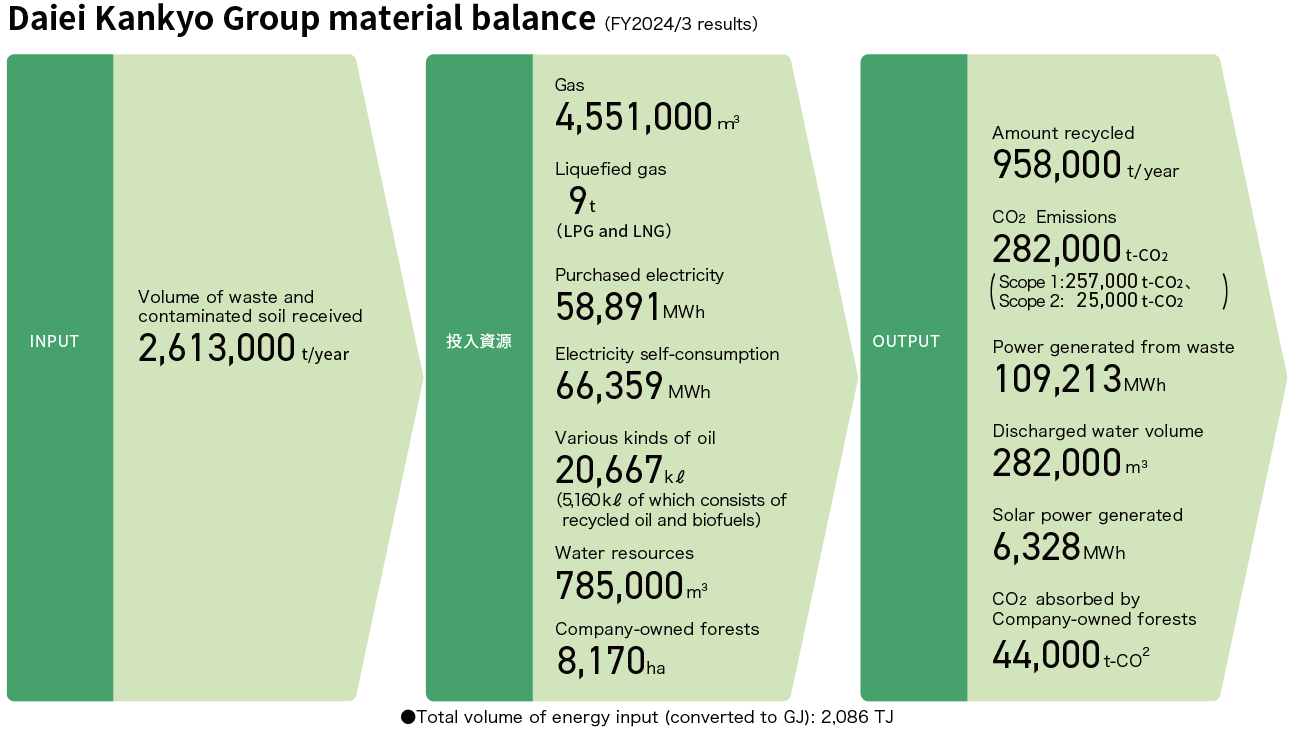
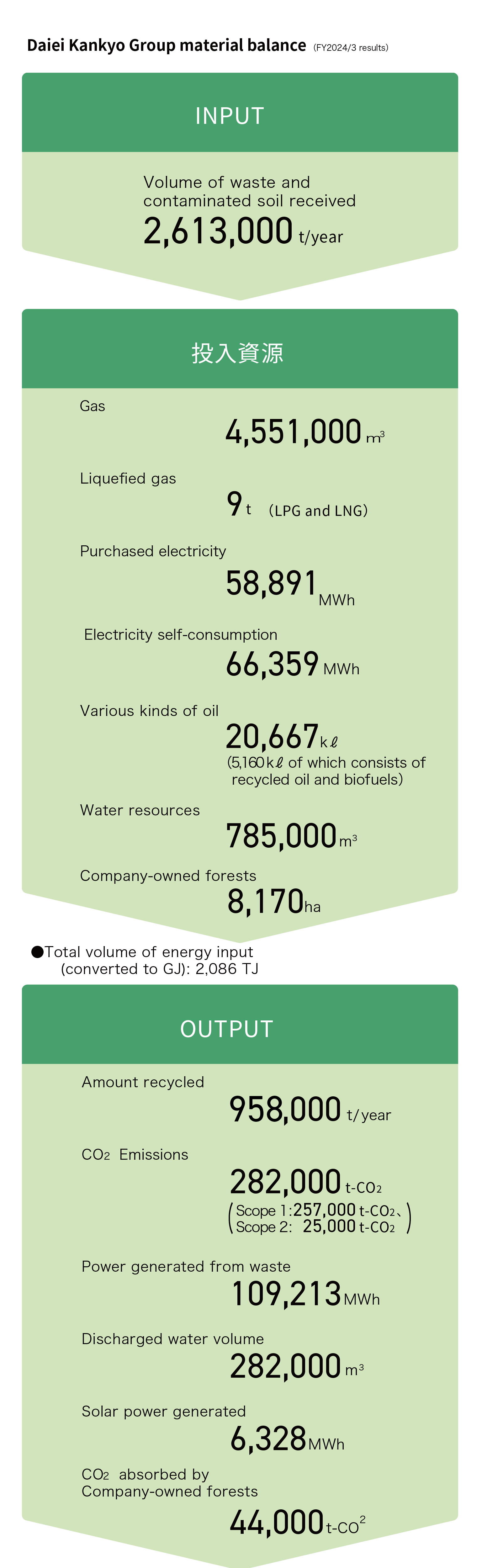
Daiei Kankyo Group Material Balance
The Daiei Kankyo Group strives to identify the environmental impacts arising from its business activities and promotes initiatives aimed at reducing those impacts.
Response to Climate Change
The Daiei Kankyo Group is making efforts to manage its energy usage and greenhouse gas emissions in order to
achieve carbon neutrality by 2050.
In the Climate Change Report 2025 survey conducted by CDP, an environmental information disclosure initiative, the
Company received a “B” rating.
News
release
(in Japanese only)
Disclosure of Financial Information on Climate Change
The Daiei Kankyo Group recognizes that responding to climate change is one of its important management issues. We are pursuing initiatives to reduce greenhouse gas emissions in society as a whole, starting from the waste management business. Specifically, we are working to advance waste management, improve the recycling rate, and generate energy through waste incineration, biogas power generation, and other means. As a company with the power to create better environments, we will continue to pursue further measures to combat climate change while also endeavoring to disclose information based on the TCFD* recommendations.
* TCFD: The Task Force on Climate-related Financial Disclosures. It was dissolved in October 2023. The International Financial Reporting Standards (IFRS) Foundation has assumed and is fulfilling that role from 2024 onward.
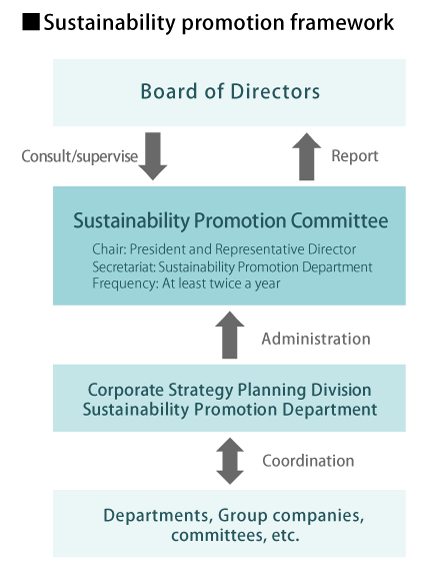
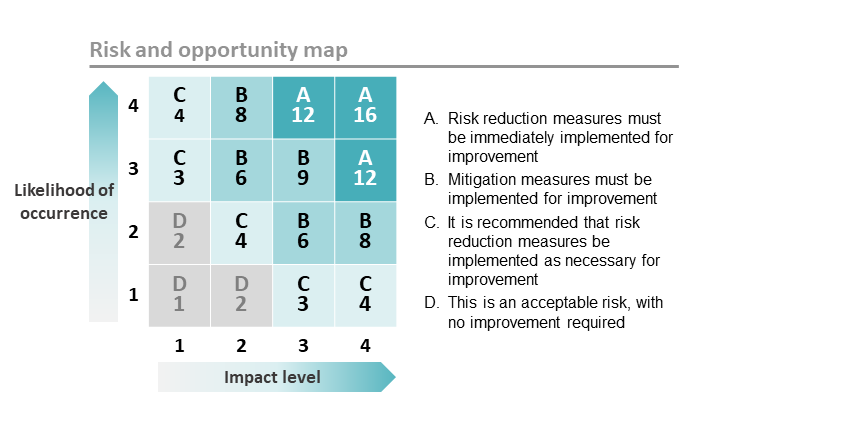
Information disclosure based on the TCFD recommendations
Initiatives to reduce greenhouse gas emissions
As part of its response to climate change risks, the Daiei Kankyo Group is promoting various initiatives to reduce greenhouse gas emissions generated through its business activities.
Daiei Kankyo Group’s greenhouse gas emission reduction targets
| 【Long-term target】 | Achieve carbon neutrality across the Daiei Kankyo Group by 2050 |
|---|---|
| 【Medium-term target】 | Achieve net zero CO2 emissions from electricity use across the Daiei Kankyo Group by 2030 |
Actual greenhouse gas emissions of the Daiei Kankyo Group
| Covered | FY2024/3 (t-CO2) |
FY2025/3 (t-CO2) |
FY2026/3 (t-CO2) |
|
|---|---|---|---|---|
| Scope 1 | All Group companies*1 | 261,601 | 252,315 | 253,212 |
| Scope 2 | All Group companies*1 | 25,013 | 19,766 | 18,678 |
| Total | All Group companies*1 | 286,615 | 272,081 | 271,890 |
| (Reference) Scope 3 | All Group companies*1,*2 | 223,306 | 184,299 | 223,562 |
- *1 D-design Co., Ltd. and INAC Football Club Co., Ltd., which became consolidated subsidiaries during the period under review, were excluded from calculation of all Group companies
- *2 Covers companies included in the Daiei Kankyo Group in the fiscal periods covered by the report
-
 Energy
conservationWe are promoting initiatives to reduce energy consumption through the efficient use of electricity and fuel.
-
 Recycled
resourcesWe contribute to the reduction of greenhouse gas emissions by promoting resource circulation in society through the proper waste management and recycling.
-
 Electricity
generationWe recover energy from waste with high efficiency and use it for power generation and heat utilization.
-
 Company-owned forests
Our company-owned forests cover an area of approximately 8,170 hectares throughout Japan and absorb and sequester approximately 44,000 tons of CO2 per year.
-
 Solar power generation
We generate renewable energy through Megasolar installed on former final disposal sites and through the use of the PPA model.
Transition in energy consumption
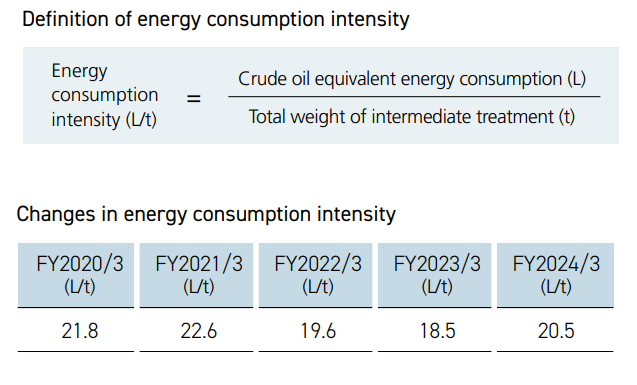
Under the Act on the Rational Use of Energy, energy consumption intensity is defined as an indicator for managing energy use, and businesses are required to reduce this intensity by an average of at least 1% per year over the most recent five-year period. The Daiei Kankyo Group defines energy consumption intensity using the formula below and conducts regular monitoring and management of this indicator.
- Changes in energy consumption intensity
-
- Energy consumption per unit (L/t)
- Crude oil equivalent energy consumption (L)/total weight of intermediate treatment (t)
(Calculated using the following conversion rates: electricity: 4 kWh = 1 L of crude oil; gas: 0.86 m3 = 1 L of crude oil; heavy oil: 1 L = 1 L of crude oil)
For the fiscal year ended March 31, 2026, energy consumption (oil equivalent) was 42,968 kL, and greenhouse gas emissions from energy consumption were 83 kt, a decrease of 3 kt compared to the previous fiscal year. Contributing factors include reduced auxiliary fuel consumption through stable incinerator operation and lower grid electricity usage resulting from an increase in on-site solar power installations.
- Groupwide energy consumption and total weight of intermediate treatment
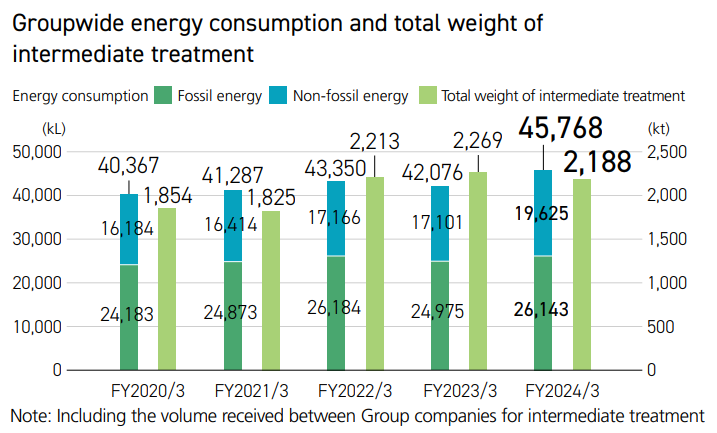
- Changes in energy consumption intensity
Energy Management Committee
The Energy Management Committee, which manages energy for the entire Group, reports on the
actual energy consumption of each department, identifies energy issues, examines countermeasures, and
horizontally deploys successful energy conservation case studies. The committee also conducts detailed
assessments estimating the amount of energy costs that can be reduced through capital expenditures on
energy-saving equipment, and uses the results as a basis for making appropriate decisions regarding such
expenditures.
Since the committee was established in 2012, a total of 312 energy conservation case studies
have been implemented by the Group, with a total energy-saving impact equivalent to an annual energy reduction
of 3,283 kL, or 9 kt of greenhouse gas emission reduction per year.
Selected energy-saving case studies
| Name of facility | Case study | Annual savings | Annual equivalent CO2 reduction |
|---|---|---|---|
| All buildings on premises | Conversion to LED lighting (cumulative up to FY2026/3) |
960,419kWh | 399.5t-CO2 |
| Intermediate treatment facility | Installation of solar power generation equipment on the roof of the facility | 1,371,000kWh | 527.6t-CO2 |
| Intermediate treatment facility | Installation of inverters on dust collectors on crushing line supply conveyors | 81,840kWh | 34.0t-CO2 |
| Water treatment facility | Installation of inverters on blower equipment | 243,528kWh | 100.1t-CO2 |
| Incinerator | Equipping forced draft fan inverters | 226,498kWh | 94.0t-CO2 |
| Incinerator | Shortened drying time due to refractory material change and reduced Heavy oil A consumption | 7,500L | 20.3t-CO2 |
-
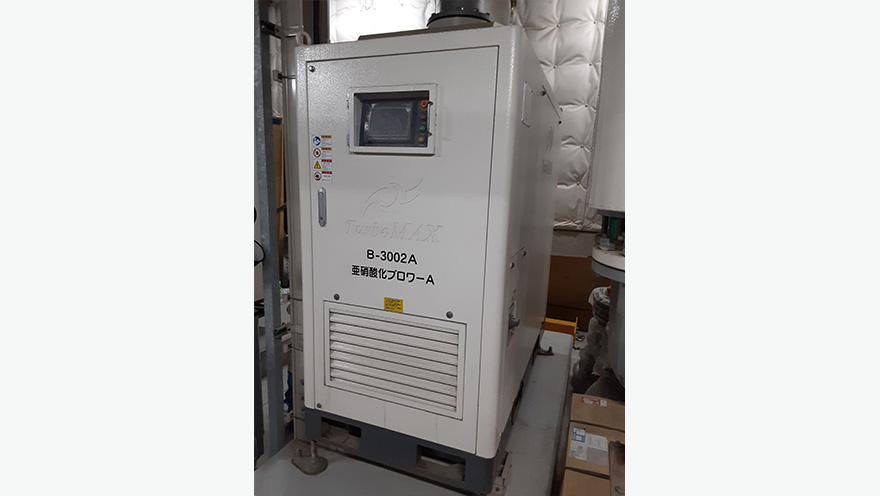
Inverters installed on blower equipment at water treatment facility at Mie Recycle Center
We installed inverters to shift the way of flow control with valve. Energy is saved by changing the output to match the flow rate. -
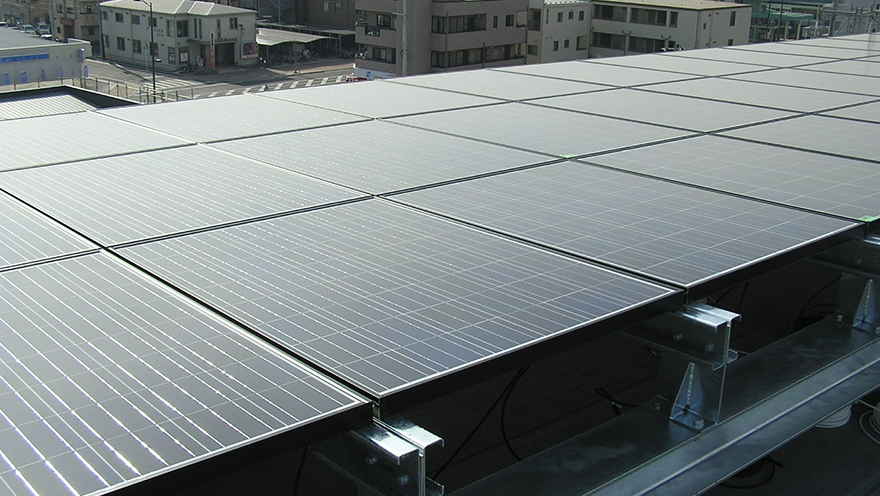
Self-consumption solar power generation facilities
・Kyodoh Doboku Co., Ltd. Tokyo Intermediate Treatment Site
・DINS Kansai Co., Ltd. R&E Recycle Center
・Mie Chuo Kaihatsu Co., Ltd. Mie Recycle Center
A total of 1,000 kW of solar panels were installed on the roofs of factory buildings at each business site, reducing electricity use through self-consumption.
Contribution to the Reduction of Greenhouse Gas (CO2) Emissions in Society as a Whole
The Group aims to reduce greenhouse gas emissions in society as a whole by promoting initiatives to recycle waste into resources and energy. For the fiscal year ended March 31, 2026, our contributions to greenhouse gas emission reduction and absorption amounted to 182 kt.

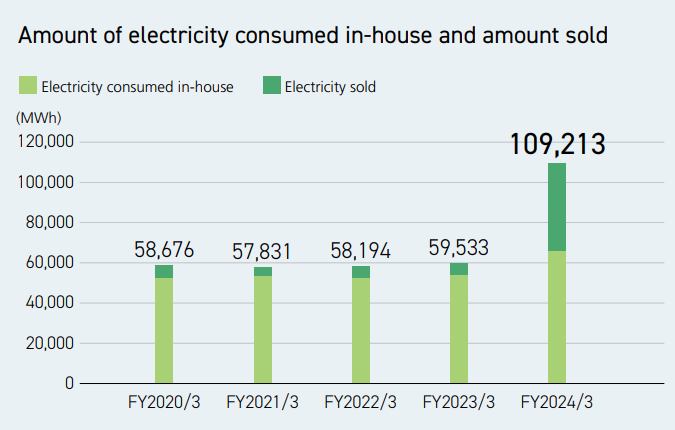
Contribution to reduction by thermal recycling
Electricity is generated by recovering the heat generated during waste incineration. The electricity
generated is used in our own facilities and surplus electricity is sold, thereby helping reduce greenhouse gas
emissions at Daiei Kankyo Co., Ltd. and in the local community.
In the fiscal year ended March 31, 2026, the total amount of electricity generated was 126,753 MWh. Of this
amount, 57,774 MWh was sold, equivalent to a reduction contribution of 24 kt.
Contribution to reduction by recycling
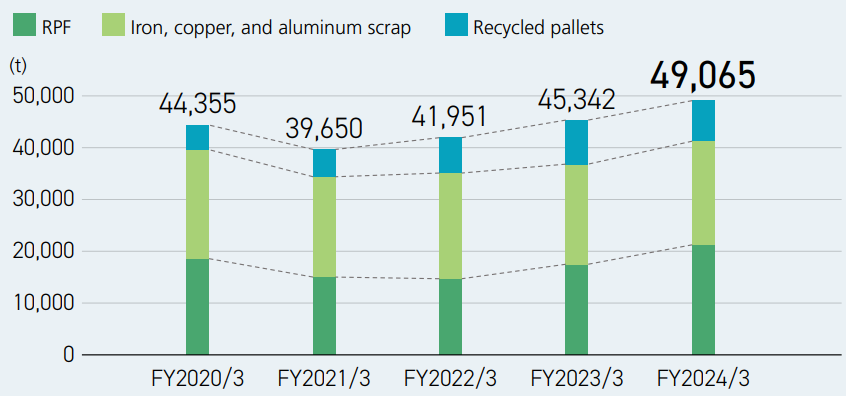
We help reduce greenhouse gas emissions by recycling a variety of waste materials such as RPF; iron, copper, and aluminum scrap; and recycled pallets. For the fiscal year ended March 31, 2026, our outgoing volume was 48,392 tons, equivalent to a greenhouse gas emission reduction contribution of 111 kt.
-
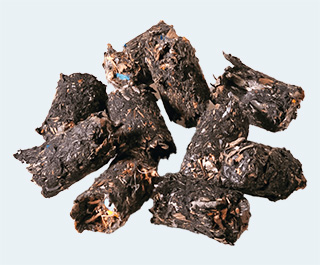
RPF (Solid fuel) CO2 reduction:
1.88 t-CO2 per ton of RPF -
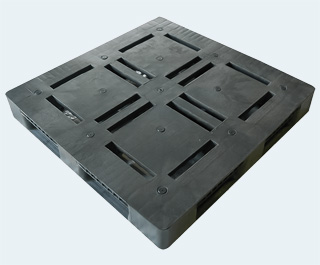
Recycled pallets CO2 reduction:
1.79 t-CO2 per ton of pallets
Contribution to reduction by solar power generation
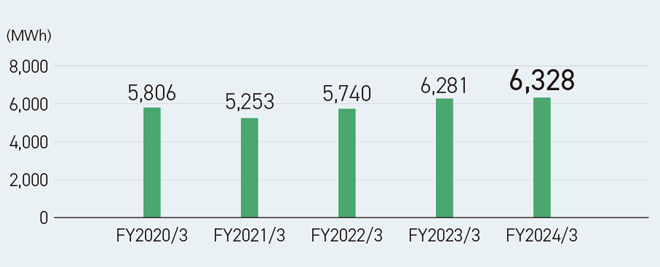
In the fiscal year ended March 31, 2026, the total amount of electricity generated was 7,851 MWh. Of this amount, 6,054 MWh was sold, equivalent to a reduction contribution of 3 kt.
Fixation by Company-owned forests
The Group owns approximately 8,170 hectares of forest (as of June 30, 2024), and the annual amount of CO2 absorption and fixation by this vast forest is 44 kt.
Realization of a True Recycling-Oriented Society
Waste Processing and Management
The Group performs contract processing of waste generated by various manufacturers, general contractors,
medical institutions, municipalities, and other businesses, and provides one-stop services from collection and
transportation to intermediate treatment, recycling, and final disposal.
The Group introduced a proprietary
integrated waste management system to appropriately process waste from contracted waste generators. Using the
system, we strive to accurately record and provide information on waste materials, volume, processing method,
and other information. Every month, we also disclose maintenance and management information according to the
Waste Management and Public Cleansing Act, including results from the analysis of exhaust gases emitted from
incineration and other heat treatment facilities, as well as effluent discharge from final disposal sites.
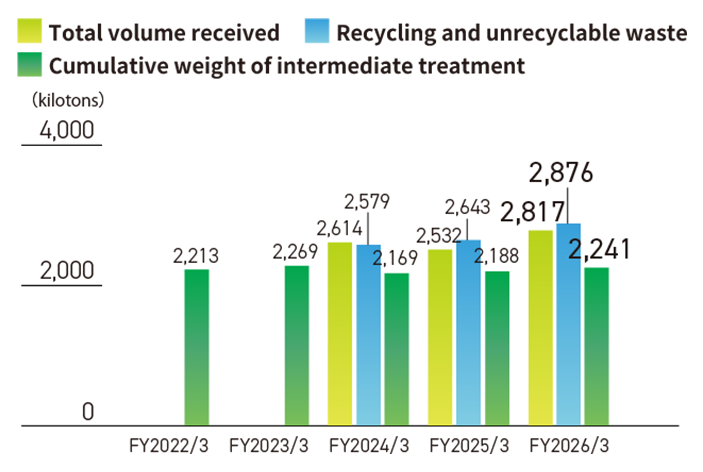
Cumulative weight of intermediate treatment, total volume received, recycling and unrecyclable waste
Treatment of hazardous waste
The Daiei Kankyo Group conducts contract treatment of highly hazardous waste classified as "specially controlled industrial waste" under the Waste Management and Public Cleansing Act. Based on treatment standards that are stricter than those applied to ordinary industrial waste, we properly treat specially controlled industrial waste to prevent environmental contamination and adverse impacts on human health.
Improving Efficiency and Advancing Resource Recycling
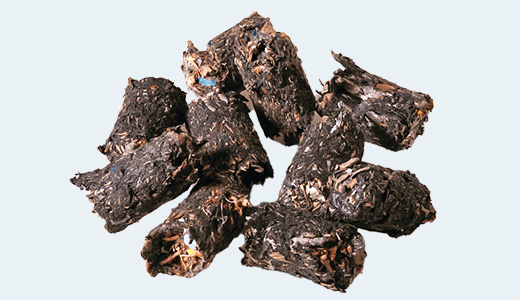
The Daiei Kankyo Group utilizes its collective strengths to propose efficient waste management and recycling for all kinds of waste. A particularly urgent issue from the perspective of achieving carbon neutrality by 2050 is reducing, recycling, and reusing waste plastics with high CO2 emission coefficients. We are improving facilities for manufacturing recycled pellets and recycled pallets from plastic waste, and are also collaborating with partner companies on development of new plastic waste recycling technology.
Plastic bottle horizontal recycling (agreements with municipalities)
We are working to build a coordinated system with beverage manufacturers, recycled raw material
manufacturers, and others to promote “bottle-to-bottle” recycling (horizontal recycling) to recycle used
plastic bottles generated from municipalities back into new plastic bottles. Based on this cooperative system,
we are concluding agreements on plastic bottle recycling with municipalities and pursuing horizontal recycling
of plastic bottles.
Cooperating municipalities
(1) Ikeda City, (2) Ashiya City, (3) Hokutan Administrative Affairs Association, (4) Kashiwara City, Habikino
City, and Fujiidera City, (5) five municipalities in Osaka, (6) Nara City, (7) Higashiosaka City, Daito City,
and the Higashiosaka Cleaning Facilities Association, (8) Sumoto City, (9) Miki City, (10) Aioi City, (11)
Shinonsen Town, (12) Takarazuka City, and (13) Sanda City
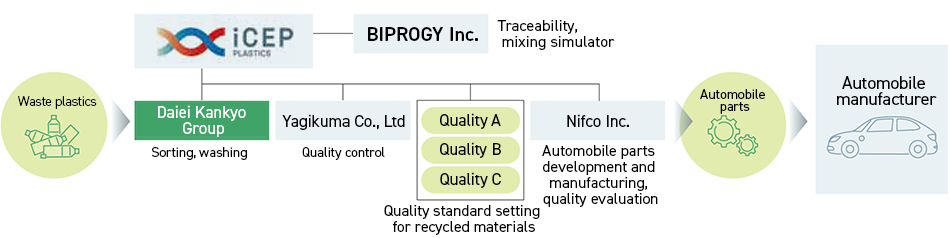
iCEP PLASTICS
It has been two years since we launched iCEP PLASTICS, a comprehensive recycling coordination service
offering one-stop support from the collection of waste plastics to the supply of recycled products through
molding and processing. This service is a collaborative effort by Daiei Kankyo Co., Ltd., Resource Circulation
Systems Co., Ltd., Yagikuma Co., Ltd., and UNIADEX, Ltd., working together to plan and implement a recycling
scheme for waste plastics and promote a circular economy through “artery–vein” collaboration.
Over the past
year, we have accumulated further achievements. In the XtoCar project, which recycles waste plastics into
automotive parts, we successfully developed prototypes, marking a major step toward practical application. We
also began developing a traceability system that enables tracking from waste plastics through to finished
products.
In initiatives within the construction industry, we also worked to increase the volume of
recyclable plastics recovered through waste separation demonstration trials at construction sites in order to
promote material recycling. In addition, through collaboration with artists, we are taking on the challenge of
creating new value through highly designed products utilizing recycled materials derived from plastic
containers and packaging. In iCEP PLASTICS, we will continue to promote artery-vein collaboration among
various companies and organizations and pursue initiatives to realize a circular society that utilizes waste
plastics as a resource.
-
Case example (1):
Daiwa House Industry Co., Ltd.Survey on recycling waste plastic generated from non-residential construction sites
- Investigation of waste plastics generated from non-residential construction sites in collaboration with Daiwa House Industry
- Promoting the development of resource-efficient environments at construction sites
Examples of products that can be made by using recycled plastics 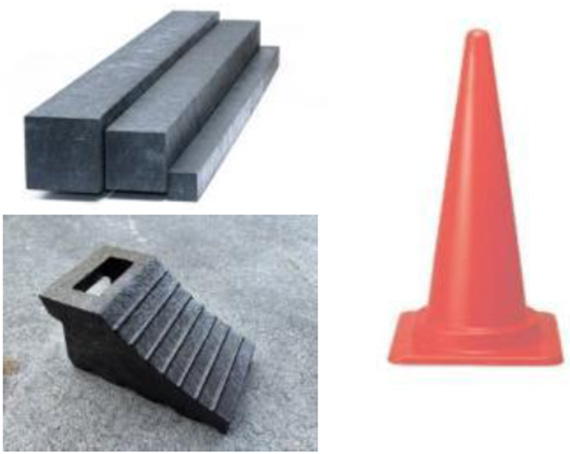
-
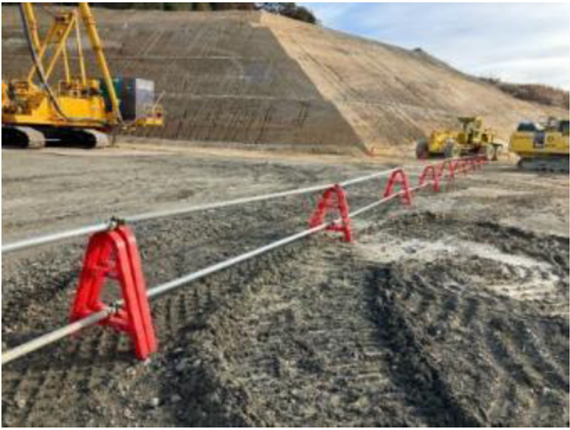
Case example (2):
Kajima CorporationRecycling waste plastic collected from construction sites into barricades
- Waste plastic collected from construction sites is used to produce recycled barricades Introduced at Kajima
- Corporation’s construction sited to achieve on-site resource recycling
-
Case example (3):
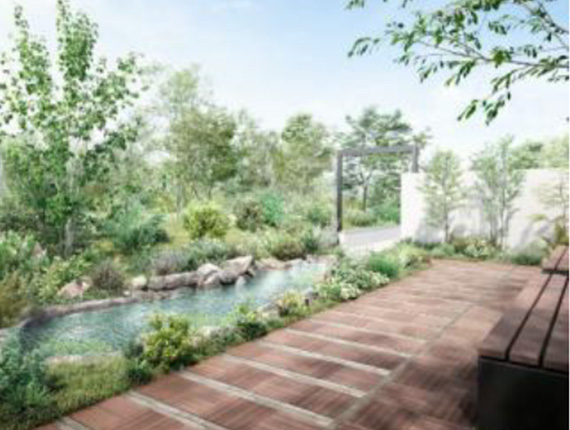
LIXIL CorporationSupplying waste plastic as raw material for paving materials
- Supplying waste plastic as raw material for recycled paving materials
- Contributing to the realization of plastic resource recycling
-
Case example (4):
XtoCar component manufacturingSuccessfully manufactured automotive components from construction waste plastics
- Physical property evaluation of a material containing 25% recycled resin derived from construction waste achieved target values
- Successfully produced prototypes using the blended resin material
- Continued second-year research aimed at applying a wider variety of waste plastics to a broader range of components
Automotive components manufactured from construction waste plastics 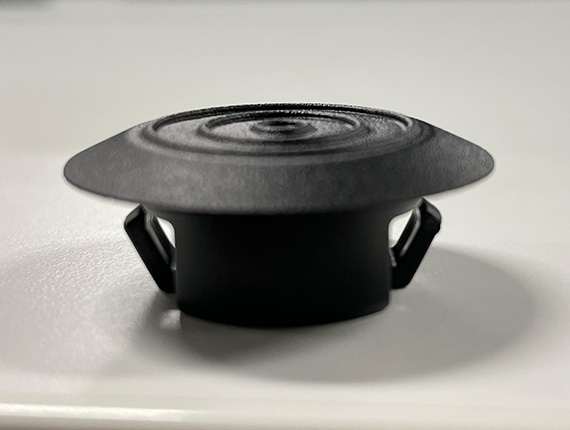
-
Case example (5):
Konoike Construction Co., Ltd.Promoting material recycling through plastic sorting at construction sites
- Initiatives to improve the material recycling rate by implementing separate collection of waste plastics at construction sites.
- Manufactured recycled plastic square-profile materials from recovered waste plastics and achieved their reuse at construction sites
Waste plastic sorting yard 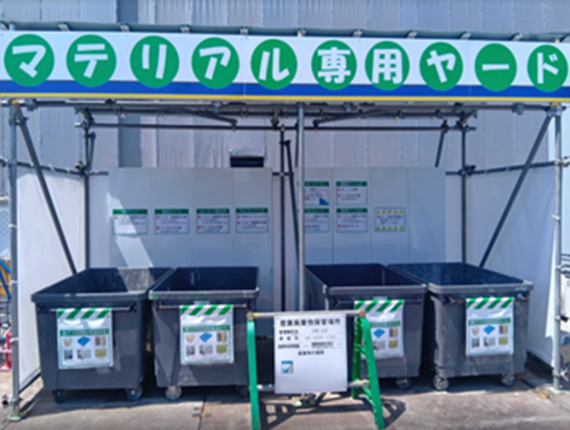
-
Case example (6):
Sustainable art exhibitionHosting a sustainable art exhibition using container and packaging plastics as a material
- Collaborated with ceramic artists Hiroshi and Akemi Tanimoto to showcase new possibilities for waste materials
- Produced and exhibited more than 50 works and welcomed approximately 1,000 visitors
Works exhibited at the sustainable art exhibition 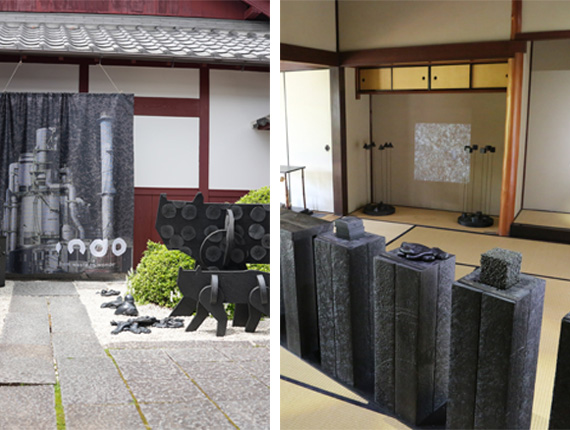
Services provided by iCEP PLASTICS
- ・Support in setting material recycling targets
- ・Planning and implementation of a waste plastic recycling scheme
- ・Identification of issues and proposal of countermeasures for waste plastic material recycling
- ・Securing a waste plastic supply and transportation network
- ・Verification of the characteristics of recycled resins according to the waste plastic
- ・Development of uses for recycled plastic, using the proprietary forming technology and network
- ・Introduction of digital tools to implement recycling projects
- ・Consulting to quantify the benefits of initiatives through life cycle assessment (LCA) calculation
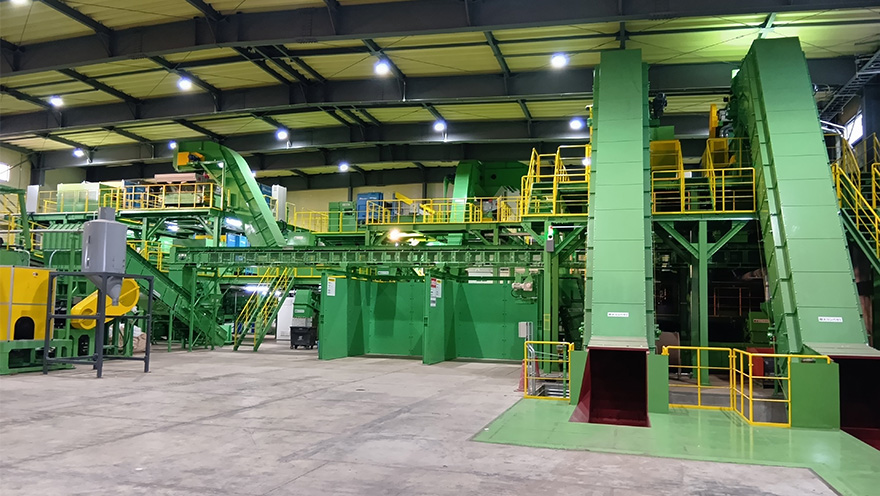
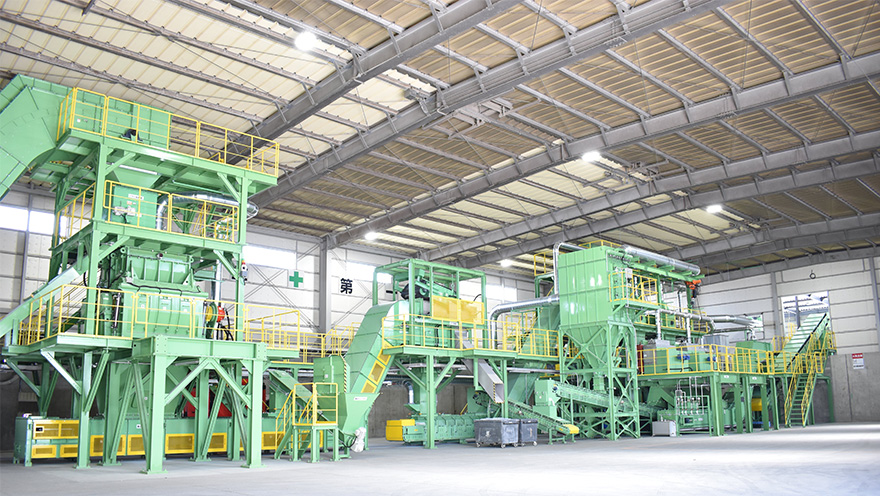
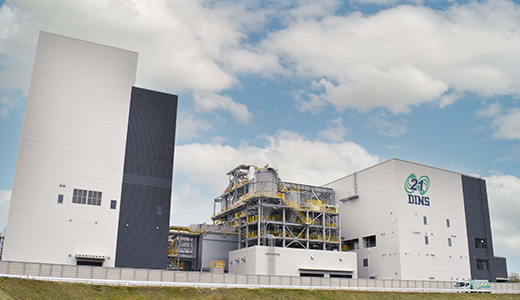
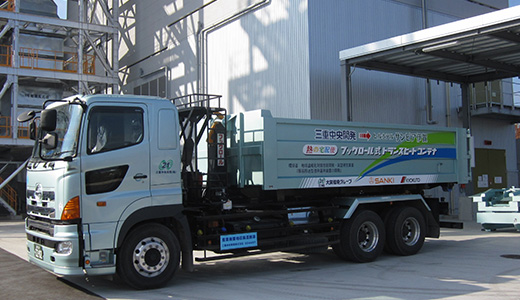
Diverse Actions for Plastic Recycling
Plastic is used in every aspect of daily life, and if not properly recycled after use, it can contribute to
environmental issues such as resource depletion, marine pollution, and climate change.
The Daiei Kankyo Group
provides a variety of treatment methods according to the characteristics of waste plastics, including material
recycling, chemical recycling, and thermal recycling. Moreover, we collaborate with a wide range of partner
companies to develop new recycling schemes covering the entire process from the collection and transportation of
waste plastics to recycling and product manufacturing.
Plastic recycling at the Daiei Kankyo Group
Promotion of Technological Development and Research Activities
The Daiei Kankyo Group is taking on the challenge of addressing not only resource recycling but also broader
social issues.
In efforts to realize Local Circular Ecological Spheres, we are exploring projects that create
energy by supplying surplus power generated from waste to local areas as a multifaceted use of local energy
centers. This initiative aims not only to promote resource recycling but also to achieve a decarbonized society
through local production and consumption of energy.
In collaboration with Daiei Kankyo Research Institute
Co., Ltd. and the Technical Department of Daiei Kankyo Co., Ltd., we have developed and implemented Hibanami, an
AI-powered fire detection system that addresses the increasing issue of lithium-ion battery fires at waste
treatment facilities. By enabling early detection and rapid response to fire risks, it supports the stable
operation of sorting and crushing facilities.
At Expo 2025 Osaka, Kansai, Japan, "smart collection boxes" are being used to collect and compost biodegradable plastic tableware. We have established a system to
remotely monitor the amount of tableware collected, and are also working to compost the collected biodegradable
plastic together with food waste at the Iga Recycle Center.
We are also continuing to explore the potential
of CCU projects.
Conservation and Effective Use of Water Resources
Policy
We recognize that water resources are an important environmental issue. We contribute to conserve healthy water resources in local communities through efforts such as reducing water usage, minimizing environmental impact, promoting efficient utilization, and preserving forests.
Response to water risks
The business locations of the Daiei Kankyo Group are situated throughout Japan. No business location is situated in an area that poses a high risk to water, according to the evaluation of water risk using Aqueduct.*
* Aqueduct: An internet-based data platform provided by the non-profit World Resources Institute (WRI) that consolidates all information related to water risks.
Water resource intake, discharge, effective use, and wastewater impact management
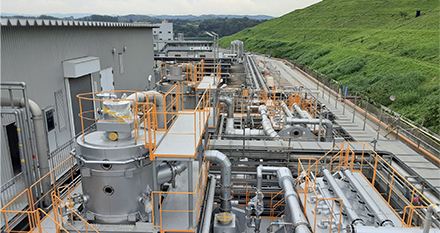
Because the Daiei Kankyo Group’s incineration and other heat treatment facilities use large volumes of water
for equipment cooling, we are promoting closed-loop systems for plant water recycling at our major heat
treatment facilities. In addition, many of our business sites collect rainwater in storage tanks for on-site
use.
Leachate generated from controlled final disposal sites is treated and purified at dedicated water
treatment facilities and properly managed in accordance with established discharge standards.
For water
quality impact management, we conduct monitoring and measurement of discharged water in compliance with
prescribed frequencies and standards.
Water quality load data
| FY2024/3 | FY2025/3 | FY2026/3 | |
|---|---|---|---|
| BOD | 0.9t | 1.9t | 8.0t |
| COD | 1.3t | 1.2t | 2.0t |
| SS | 1.1t | 3.2t | 7.0t |
Conservation of water resources
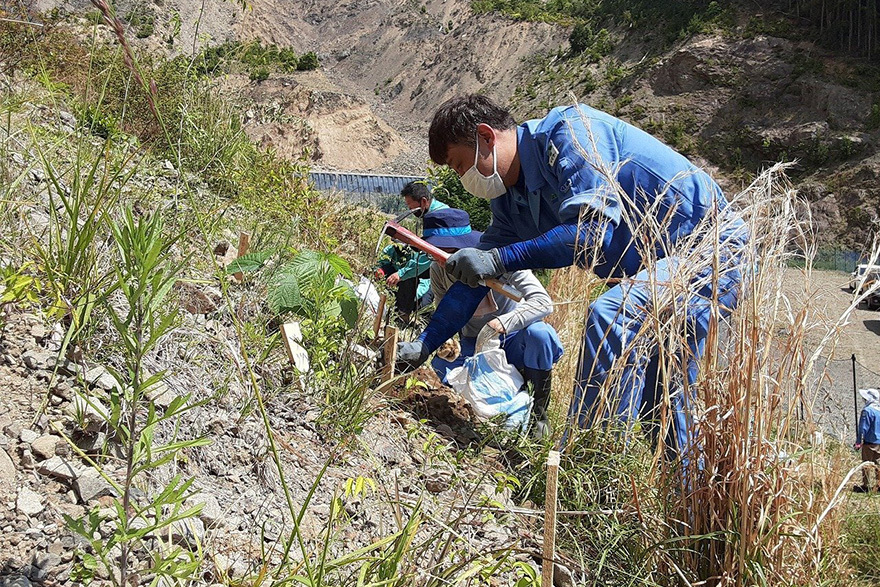
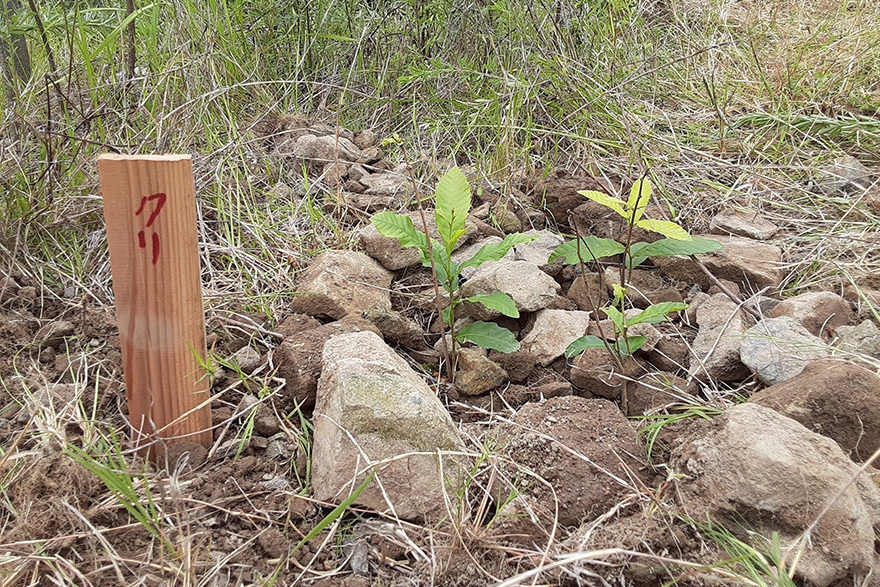
We manage the Company-owned forests, including the forest in Mimata Town, Miyazaki, which is nationally certified as a Natural Symbiosis Site. We also preserve the water resource restoration function through the Odai Project to plant local saplings seeds in landslide-prone areas and cultivate diverse forests.
-
Planting on landslide-affected areas -
Planting chestnut seedlings
Conservation of Biodiversity
Basic Approach to Biodiversity Conservation
The Daiei Kankyo Group is fully aware that its business activities may have an impact on ecosystems, and is working to conserve biodiversity, which is one of the key issues for the building of Local Circular Ecological Spheres.
Participation in the 30by30 Alliance for Biodiversity
In October 2023, we joined the 30by30 Alliance for Biodiversity, a joint alliance consisting of the national government, the Ministry of the Environment, NPOs, companies, and other bodies, formed with the aim of achieving the 30by30 target of preserving or protecting 30% of land and sea areas by 2030. We will contribute to the achievement of the 30by30 target through the expansion of OECM* as Nature Symbiosis Sites, and information sharing with other alliance members.
*OECM (Other Effective area-based Conservation Measures)
Areas that contribute to the conservation of biodiversity other than nature reserves, such as company-owned
forests and border zones between mountain foothills and arable flat land.
30by30 Alliance for Biodiversity (Ministry of the Environment website) (JP)
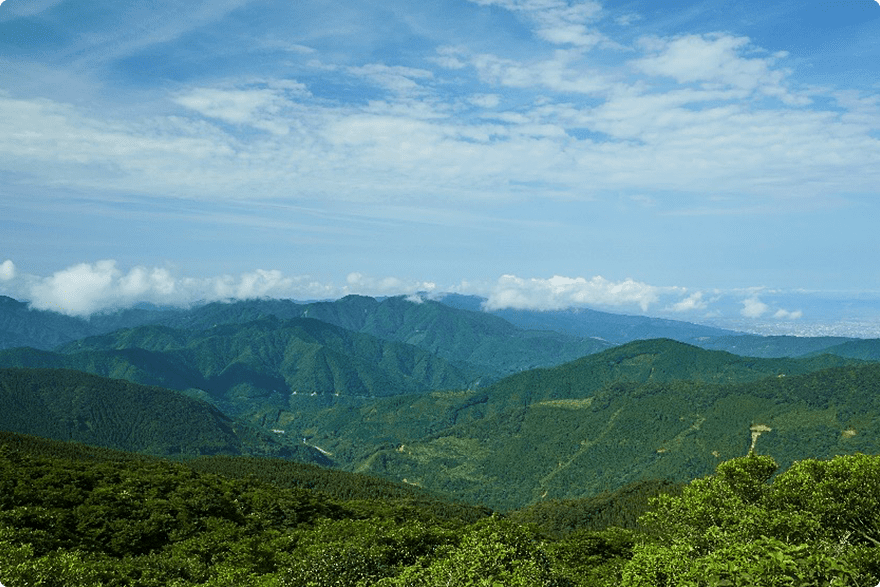
Certified as a Natural Symbiosis Site (site name: Daiei Kankyo Miyazaki Mimata Forest)
On October 6, 2023, General Agriculture & Forestry Co., Ltd., a consolidated subsidiary, acquired
certification of a specified area in a Company-owned forest located in Mimata Town, Miyazaki as a Natural
Symbiosis Site by the Ministry of the Environment, which certifies sites that meet the criteria for conservation
value and management plans. This program covers locations where conservation of biodiversity is promoted through
the initiatives of private sectors and organizations.
This certification enabled us to give form to the idea that directing awareness to the broader ecosystem, rather
than only rare species, will lead to sustainable communities. Going forward we will continue to cooperate with
local communities and experts, monitor and manage the certified site, and take steps to conserve biodiversity
thereby contributing to Nature Positive by 2030.*
* Nature Positive by 2030: An initiative to stop the loss of biodiversity and put it on a recovery trajectory
Monitoring survey
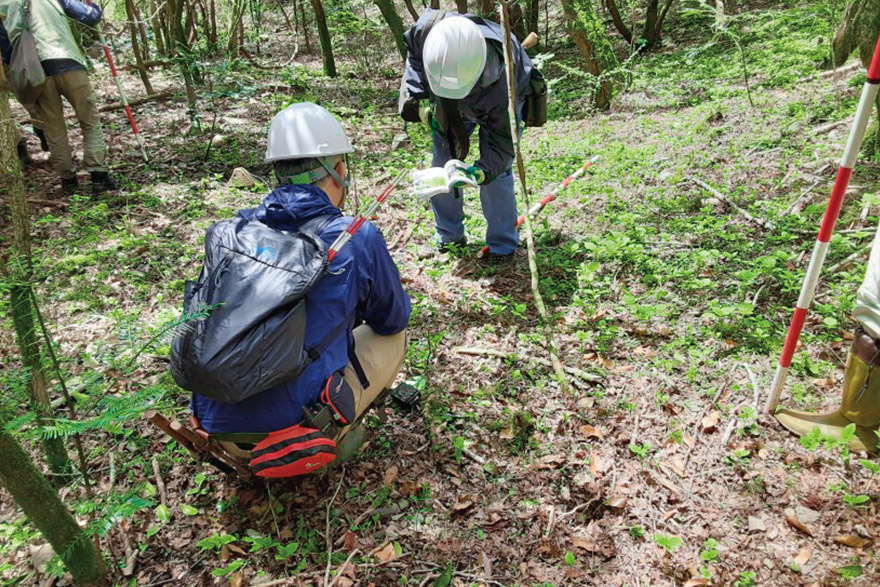
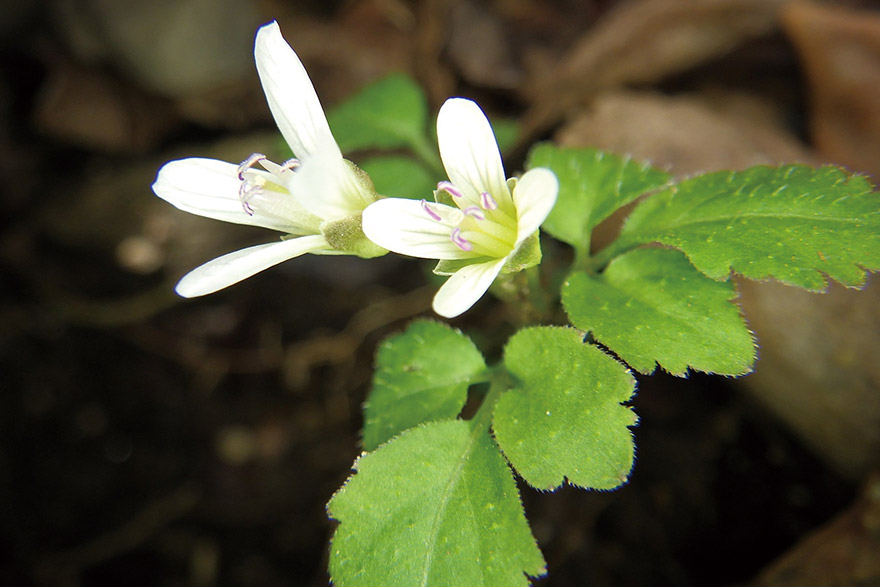
A monitoring survey is performed regularly in the certified site, timed to coincide with blooming each season. A
local expert also accompanies us as we identify plants discovered and record location and other information.
The information on plants discovered during surveys is also linked to Forest GIS and is used as one part of the
materials for making decisions on considering forest areas to thin and the thinning method in the forest in
Mimata Town, Miyazaki owned by Daiei Kankyo, which has long been forestry land.
-
Surveying
-
A rare species in bloom
-
30by30 Alliance for Biodiversity Logo
-
Daiei Kankyo Miyazaki Mimata Forest
Natural Symbiosis Sites (Ministry of the Environment website) (JP)
Chemical Management
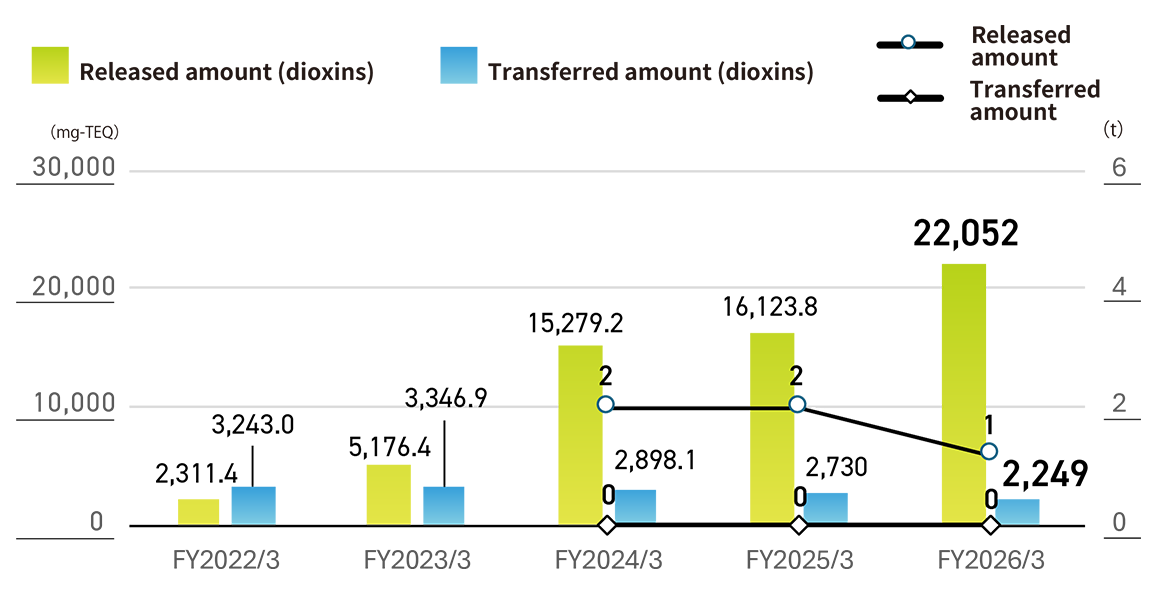
The Daiei Kankyo Group strives to ensure the proper management of chemical products used in its business activities. We conduct chemical risk assessments for employees who handle specific chemical products and implement measures to reduce health hazards caused by exposure to hazardous substances. We also monitor the transfer and emission volumes of chemical substances released into the external environment from each business site based on the Pollutant Release and Transfer Register (PRTR) system.
PRTR substances
Examples of Initiatives at Business Locations
Measures against air and water pollution
The Daiei Kankyo Group is committed to reducing impacts on the air and water environment through strict
compliance with emission standards stipulated by laws, regulations, ordinances, and environmental
conservation agreements.
For exhaust gas generated from incineration facilities, we reduce air pollutant
emissions through appropriate treatment using purification equipment and improvements in operational
management.
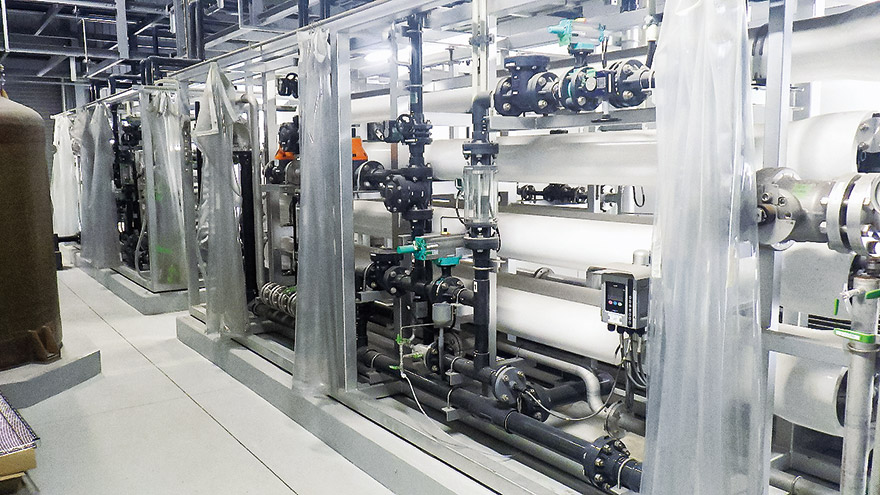
For leachate generated from final disposal sites, we have installed dedicated water treatment
facilities to prevent water pollution. In particular, the final disposal site water treatment facilities at
the Izumi Recycle Center of Daiei Kankyo Co., Ltd. and the Mie Recycle Center of Mie Chuo Kaihatsu Co., Ltd.
have introduced reverse osmosis (RO) membrane treatment equipment in the final stage of water treatment to
further reduce environmental impact.
Measures against odor and dust
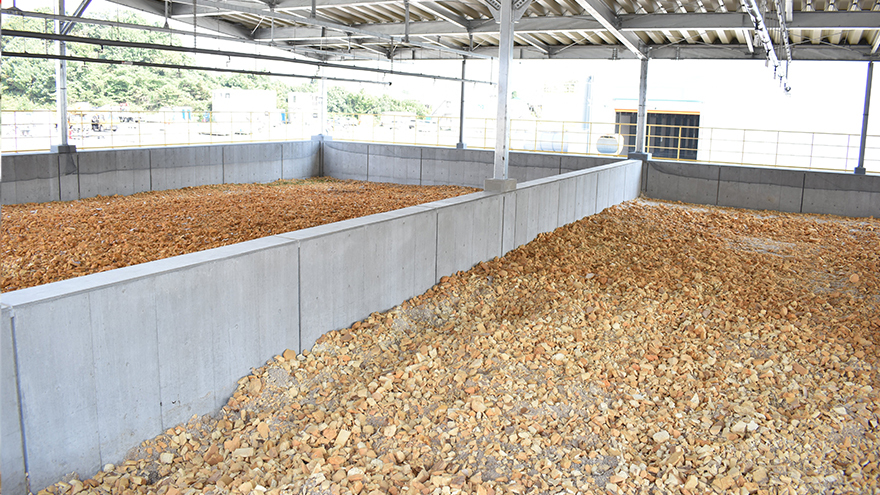
To prevent the spread of odors and dust in the waste management process, we have introduced deodorization
and dust collection equipment. We conduct the early detection and correction of abnormalities for proper
maintenance by inspecting and managing them in the course of our daily work.
Appropriate deodorization equipment is selected according to the characteristics of the waste handled. Rock
wool deodorization equipment is installed at the composting facilities of the Miki Recycle Center and the
Iga Recycle Center of Daiei Kankyo Co., Ltd.
Environmental Pollution and Accident Prevention Drills
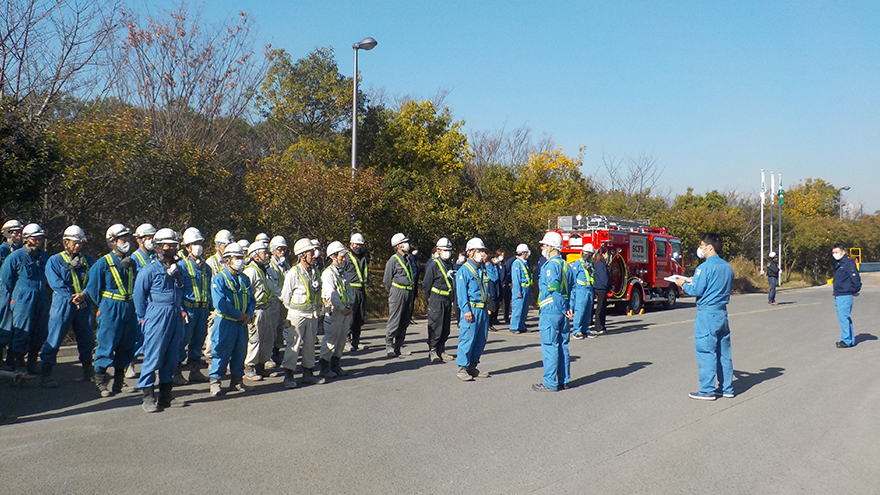
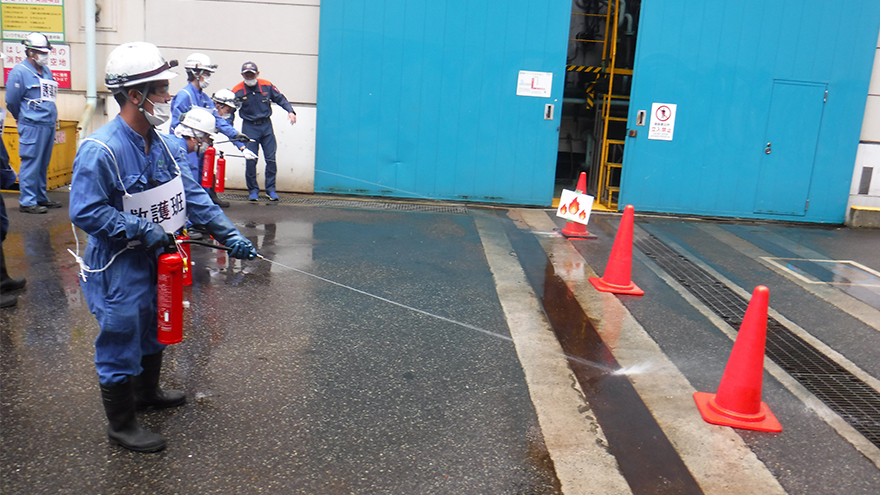
In recent years, there have been frequent fires caused by the ignition of lithium-ion batteries mixed with waste in waste management facilities. If it is not possible to extinguish the fire early, the function of the facility will stop, and the social infrastructure of waste management will be disrupted. We are installing spark detection systems, fire sprinkler systems, and other mitigation equipment Companywide, near crushing machines, which pose a particularly high risk of fire. Additionally, we consistently conduct fire drills to be prepared for emergencies.
Environmental Management
To realize the environmental philosophy we profess as a corporate group that deals with the environment, we
outline a basic policy on the environment for the entire Company, each recycling facility formulates an
environmental policy, and we pursue initiatives based on our environmental management organizational
structure.
We also formulate an environmental conduct code and work to make sure that each employee is aware of and
understands the conduct expected of them to prepare them for their work.
Structure
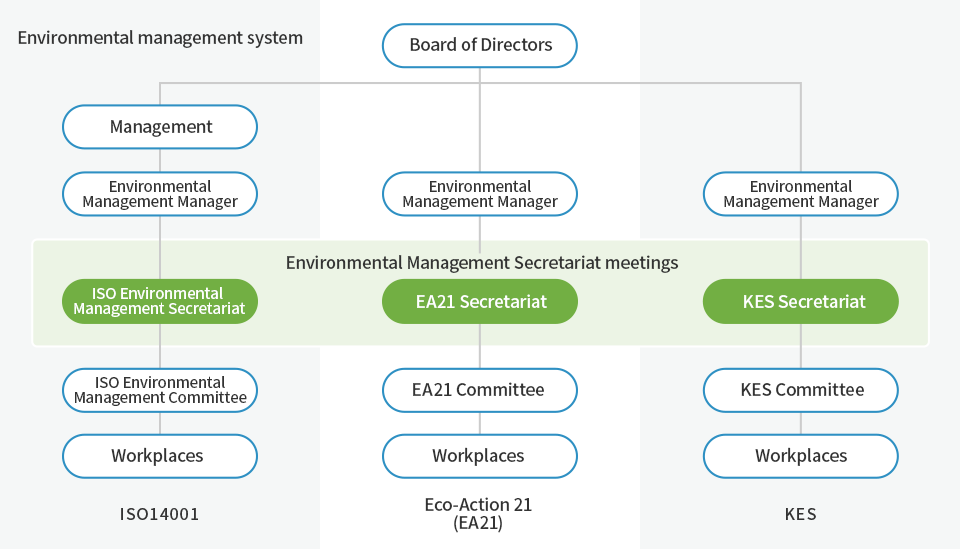
Since first obtaining ISO 14001 certification in 1998, Daiei Kankyo Co., Ltd. has progressively acquired environmental management system certifications at business sites across the Daiei Kankyo Group and expanded its environmental management structure. Through these efforts, the Group is promoting initiatives in an integrated manner to reduce environmental impacts, including greenhouse gas emissions, and enhance environmental awareness among employees.
Certification coverage rate across the Daiei Kankyo Group
76.48% (As of March 31, 2026)
(Calculated as the ratio of the number of employees at certified sites to the total number of employees
[combined ISO, EA21, and KES])
The Daiei Kankyo Group primarily pursues environmental management system certification for companies engaged in waste management and recycling businesses with significant environmental impacts.
| ISO14001 | Eco Action 21 (EA21) | KES | |
|---|---|---|---|
| Number of certified companies as of March 31, 2026 | 20 | 11 | 1 |
| Number of companies planned to be certified by FY2027/3 | 21 or 20 | 11 or 12 | 1 |
Initiatives in FY2026/3
| Decarbonization | Advanced efforts to streamline the calculation of Companywide Scope 1 to 3 emissions and improve their visibility. |
|---|---|
| Biodiversity | Continued existing biodiversity initiatives and surveyed activities across the Group to compile the findings. |
| Water resource management |
Surveyed initiatives within the Group on water resource conservation and management, and compiled the findings. |
Initiatives in FY2027/3
| Advancing Materiality 3 "Contributing to a decarbonized society and reducing our impact on the environment" |
Develop initiatives that contribute to the action plans below.
|
|---|---|
| Biodiversity | Continue existing biodiversity initiatives and conduct a survey of activities across the Group to compile the findings. |
| Water resource management | Survey initiatives within the Group on water resource conservation and management, and compile the findings. |
| Initiatives that build trust | Promote and continue Companywide initiatives, including green activities, various community engagement activities, and the sustainable rally initiative. |
Environmental Audits
In addition to external certifications such as ISO 14001, the Daiei Kankyo Group conducts annual internal
environmental audits for companies certified under ISO 14001 and selected EA21-certified companies, combining
document-based audits with on-site inspections.
The results of internal environmental audits are also
reported to the president and management team.
Internal and external environmental audits conducted in FY2026/3
| Number of Daiei Kankyo Group business sites | 62* |
|---|---|
| Number of sites that have obtained ISO 14001 or Eco-Action 21 certification | 32 |
| Number of sites that conduct internal environment audits | 24 |
| Number of sites that undergo external environmental audits | 32 |
| Number of nonconformities found in internal environmental audits | 40 |
| Number of nonconformities found in external environmental audits | 0 |
* 62: 35 recycling facilities and 27 other business locations in the table of waste management and recycling business locations, in the overview of the Daiei Kankyo Group
Sustainable rallies
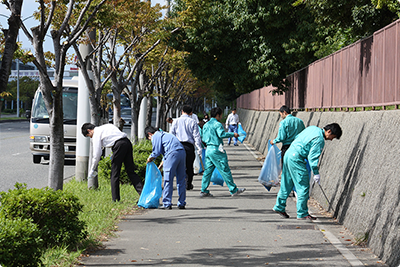
We conduct Groupwide “Sustainable rallies” in which participants earn points for various actions toward a
sustainable society in the form of a rally. These rallies are designed to be easy for anyone including those
from partner companies to participate in, such as purchasing discounted products close to the expiration date
and conserving water.
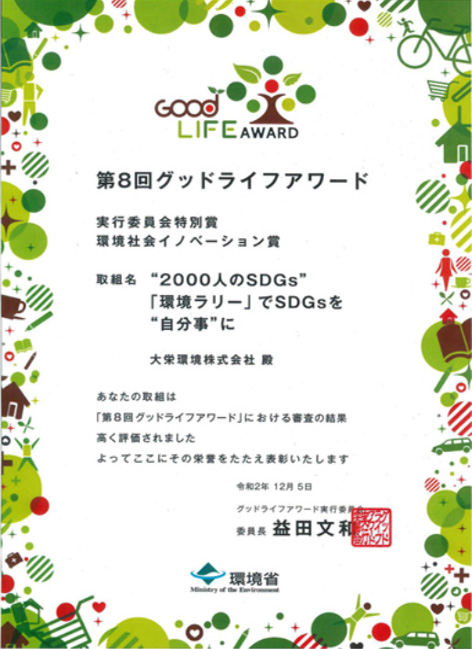
Our Group has been continuing these initiatives for over the decade. The predecessor to the sustainable rally,
the environmental rally, received the Executive Committee Special Award and the Environmental and Social
Innovation Award at the 8th Good Life Award, hosted by the Ministry of the Environment. We will continue to
promote human resource development through the sustainable rally.
Environmental Education
The Daiei Kankyo Group conducts a variety of environmental education activities. Focusing particularly on children who will shape future generations, we strive to help people feel more familiar with waste management and recycling and deepen their understanding of the Group's businesses.
On-site classes and educational field trips
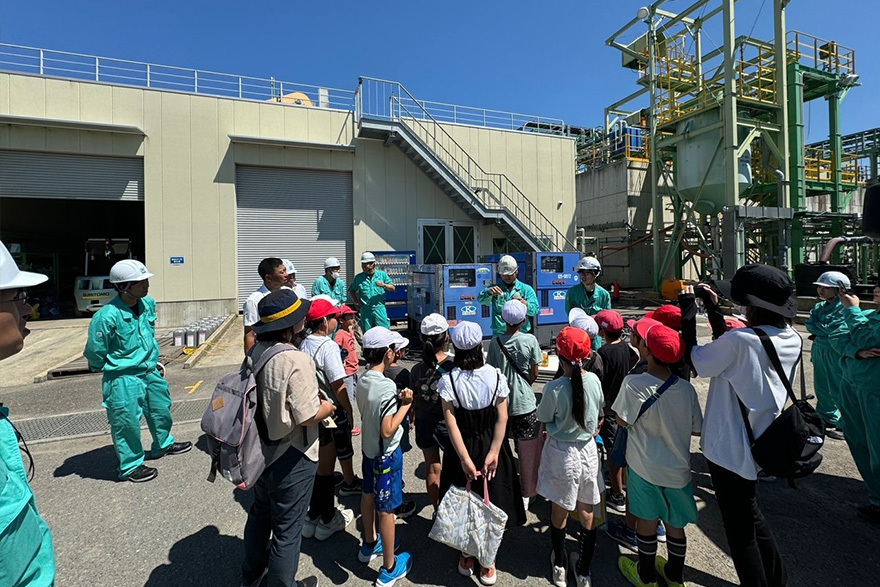
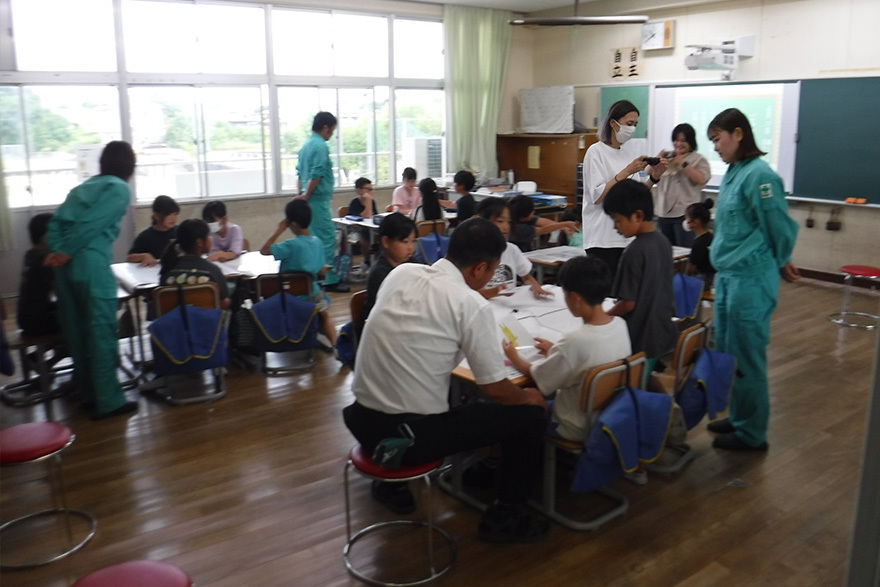
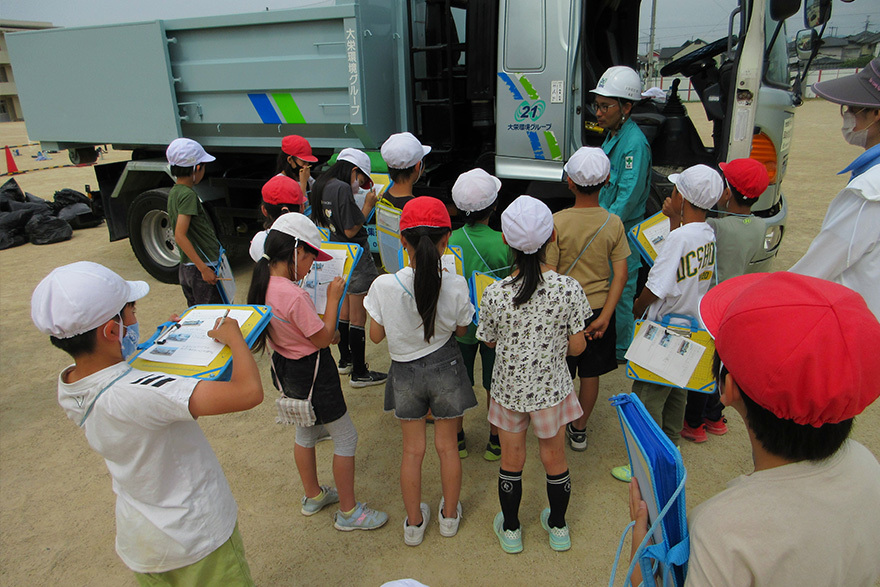
Primarily in response to requests from elementary and junior high schools, we provide outreach classes at schools and accept educational field trips to our business sites. While the children learn about the SDGs, the 3Rs, and recycling systems, together we consider what a sustainable society could be.
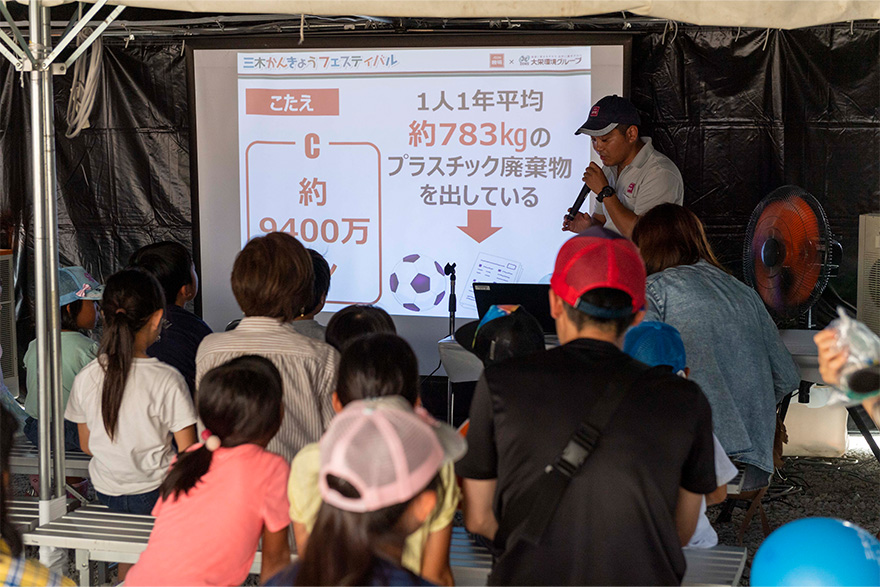
Outreach events
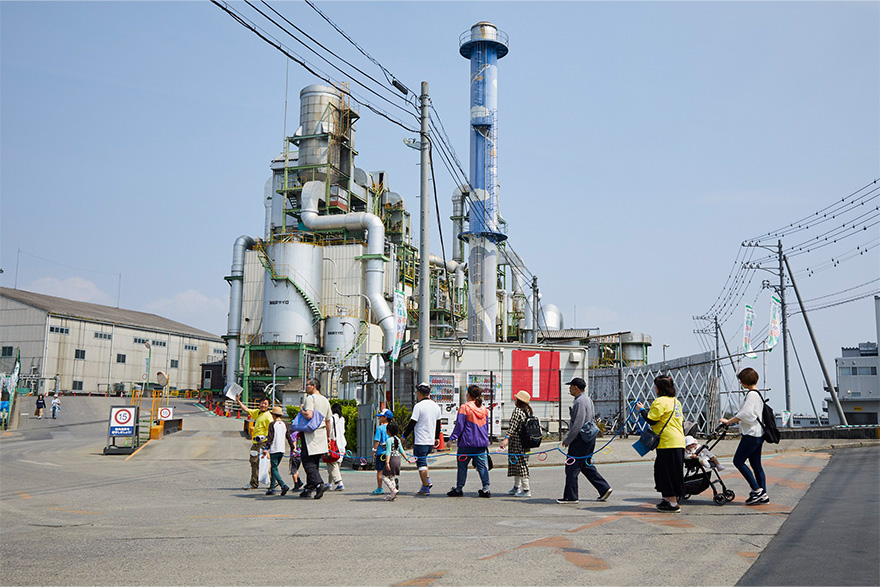
We hold our own events, including the Miki Environment Festival and the Fureai Festival (Community Appreciation Festival). As part of these programs, we also provide environmental education activities that families can easily understand and enjoy together.
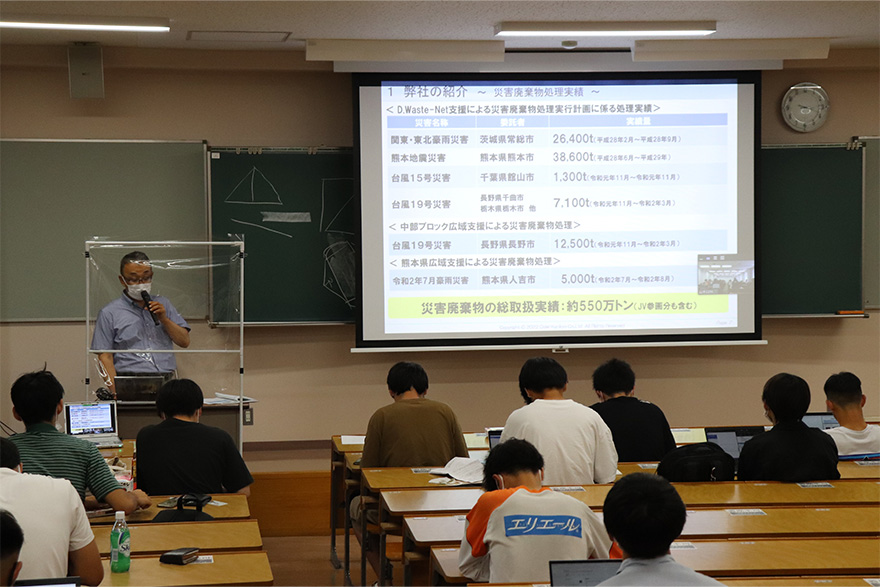
University lectures
We provide guest lectures at universities and other academic institutions. Drawing on the Group's experience and achievements, we deliver lectures on topics tailored to each program, including resource circulation policy and disaster waste management.
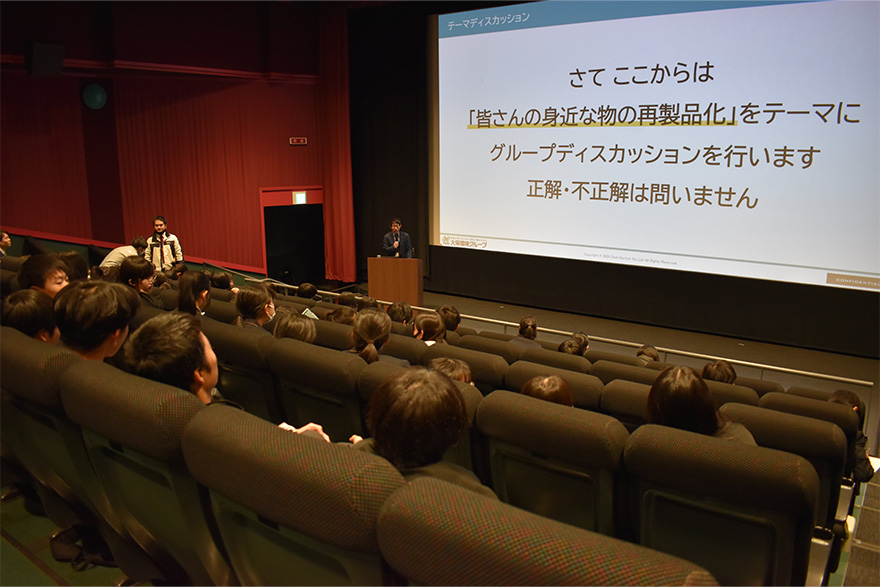
KOBE SDGs exploration program
We participate in the KOBE SDGs Exploration Program, an educational program organized by the Kobe Tourism Bureau. Centered on waste management and recycling, the program provides junior high and high school students with opportunities to learn about the SDGs and consider future career paths.
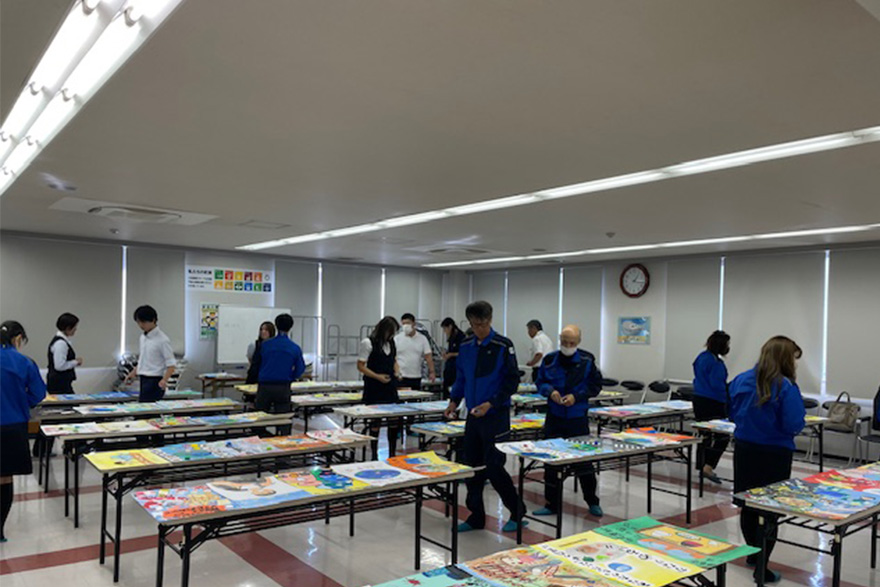
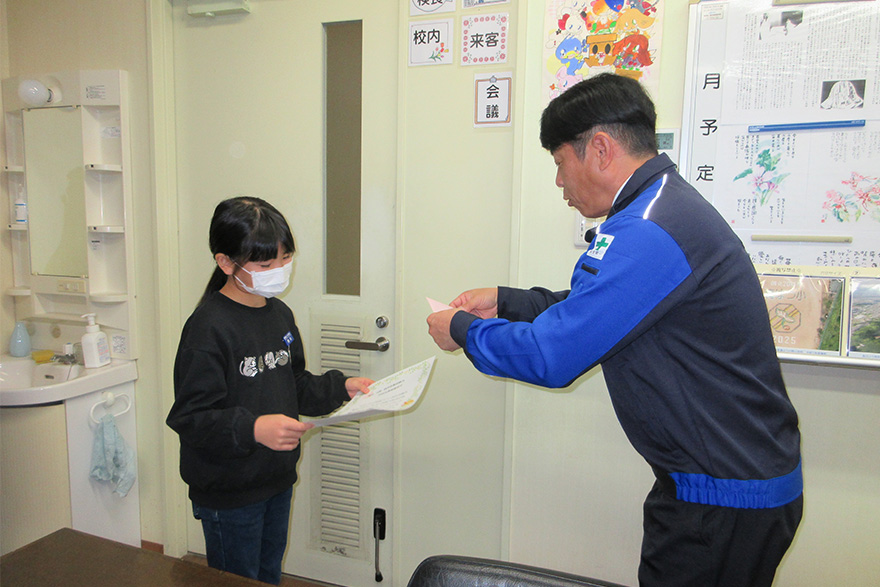
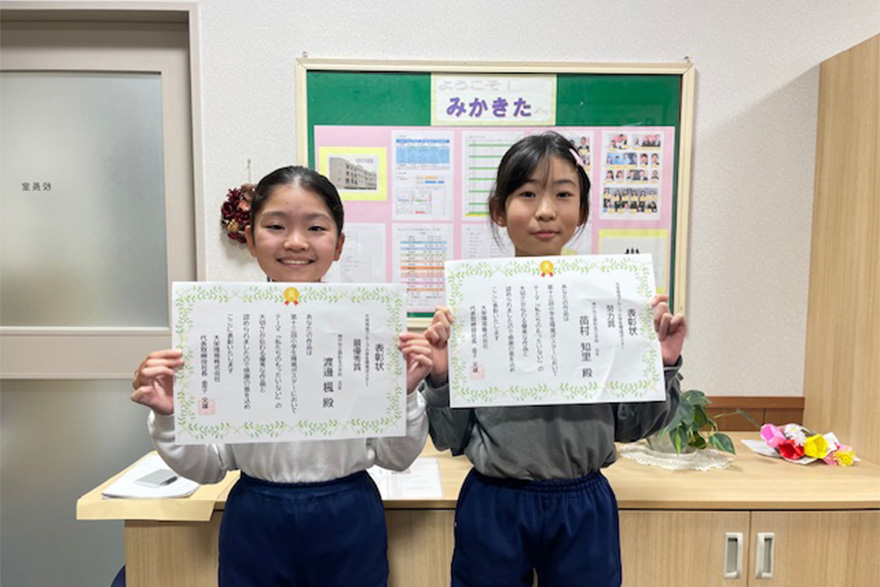
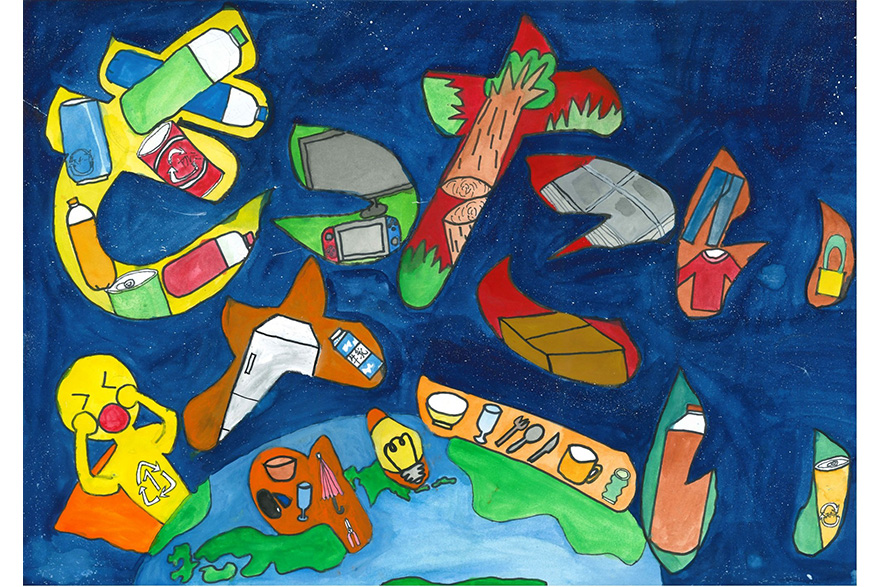
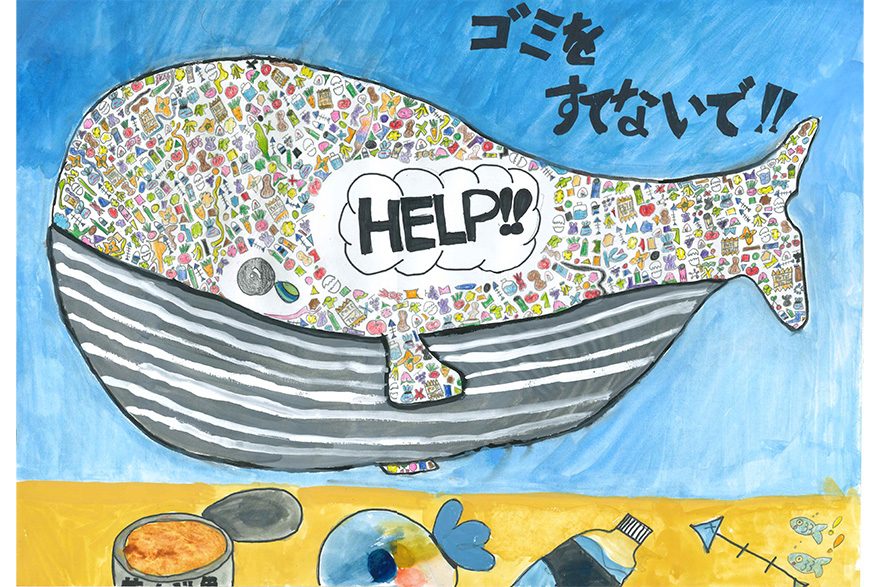
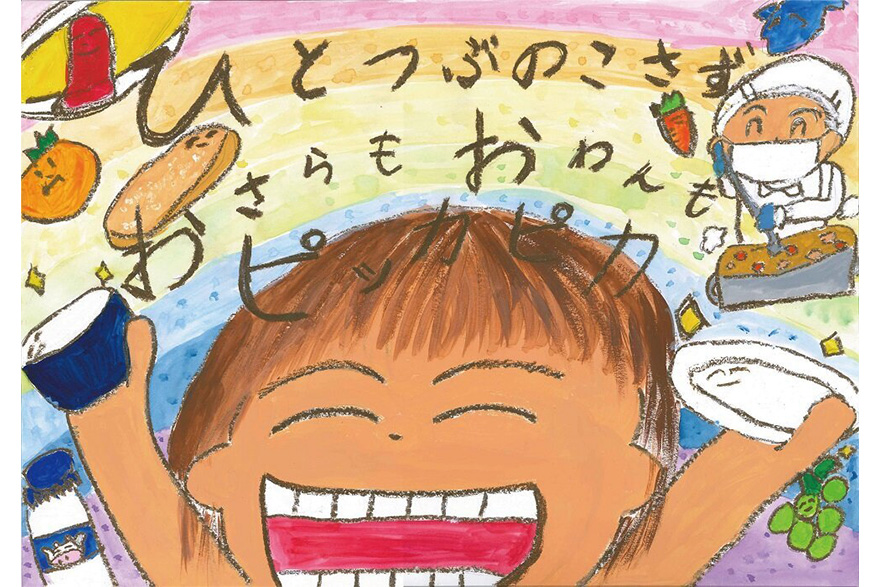
Environmental Poster
We invite elementary school students to submit environmental posters as part of our initiative to support environmental education for children in the local community.