
Society
Basic Approach
We are committed to proactively addressing social issues over the medium to long term.
As a Company that Supports Society
Society as a whole faces a number of pressing issues, such as fiscal problems in public administration due to a declining population, and disasters that are becoming more severe due to global warming. The Daiei Kankyo Group will actively take a variety of measures to solve these issues and fulfill our responsibility as a company that supports society.
Establishment of Local Circular Ecological Spheres
As the working population continues to decline, there is an urgent need for expenditure reform in public administration to achieve fiscal soundness. We believe that it is essential to work toward the creation of a sustainable society by having the private sector efficiently develop and manage waste management facilities, an indispensable social infrastructure for local communities. By March 31, 2031, our Group aims to build consensus for the establishment of local Circular Ecological Spheres through public-private partnerships in 12 locations across Japan. We will work with the municipalities of each area and reliable partner companies to circulate waste into the community as energy and resources at energy centers established in accordance with the conditions of each region.
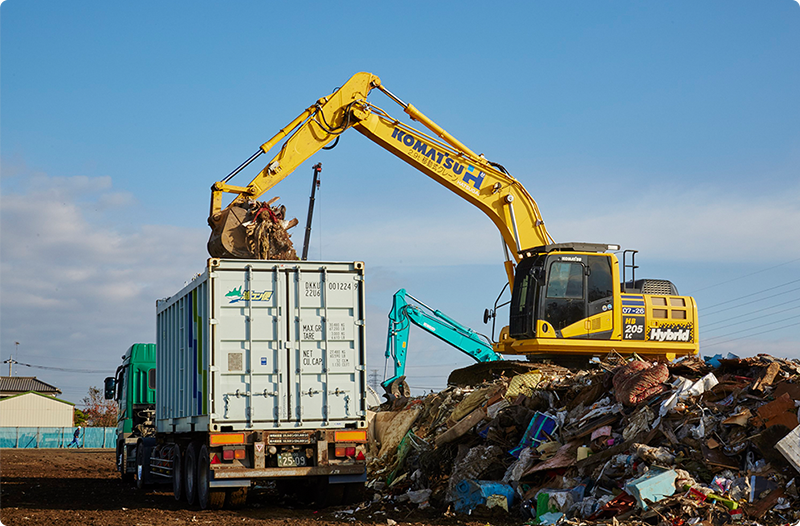
Disaster waste management
Preparation for disasters, which are becoming more severe as a result of global warming, is a pressing issue for society as a whole, and is also important in promoting public-private partnerships. Our group has constructed a framework that enables us to respond to disaster waste management in a consistent and prompt manner through such things as the establishment of systems, the development of proprietary technologies, networking among businesses, and the revision of response manuals.
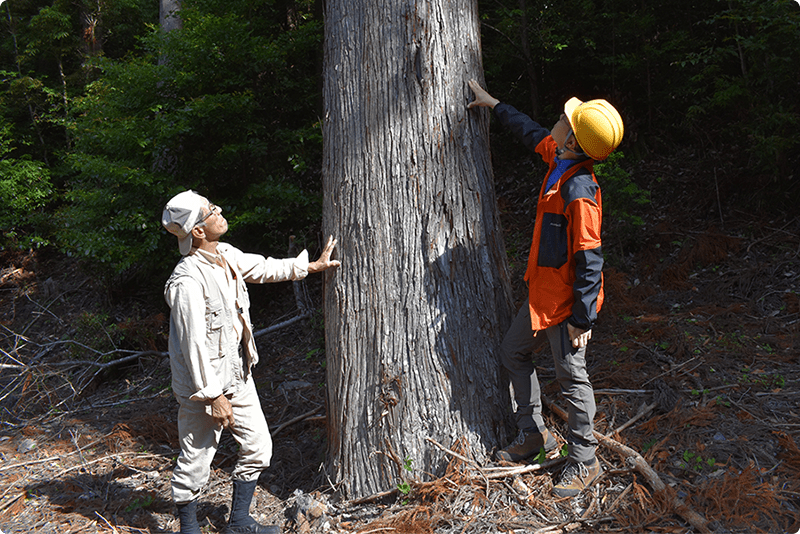
Revitalization of the forestry industry
Efforts to conserve forests are important as a measure to cope with global warming. We will contribute to the revitalization of Japan’s forestry industry by developing efficient forest management projects that balances the environment and the economy.
Solving social issues through AI and digital transformation
We aim to improve operational efficiency and productivity in the field of waste management by promoting the use of AI and digital transformation through open innovation in collaboration with industry, academia, and government.
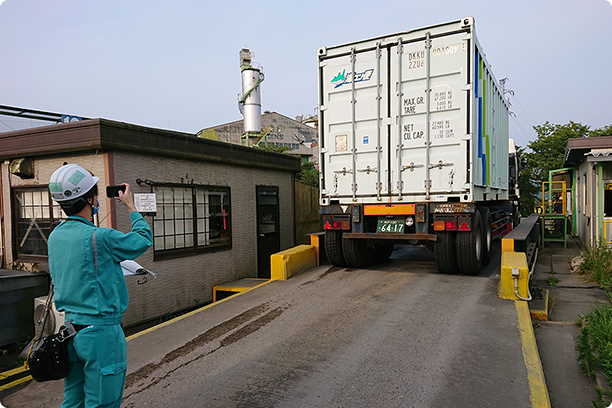
Sustainable Collection and Transportation
Maintaining transportation capacity through labor hour management and diverse work arrangements
In response to the labor hour regulations for collection drivers that came into effect in April 2024, the Daiei
Kankyo Group has continued to manage the working hours of drivers employed as regular employees and temporary
workers. In addition, in order to respond to increases in collection and transportation volumes and changes in
the business environment, we have continued efforts to improve transportation capacity within regulated working
hours by strengthening collaboration with existing partner companies, establishing alliances with new partner
companies, and providing indirect support for the operational management of partner companies.
We also reviewed our recruitment initiatives as part of measures to address the driver shortage that has become
a growing issue in recent years. While continuing to recruit for standard working-hour positions, we have also
introduced work arrangements that accommodate diverse working styles, including shorter working hours and
designated workday schedules, thereby strengthening our hiring framework to secure and retain personnel.
Building a sustainable transportation system through logistics optimization and appropriate pricing
In response to rising transportation costs and the need to reduce environmental impact, the Daiei Kankyo Group
has established a transportation system that makes effective use of facilities across the Group, rather than
limiting processing destinations to Daiei Kankyo Co., Ltd., enabling waste to be transported to the treatment
facility closest to the customer. Shorter transportation distances not only help reduce transportation costs,
but also contribute to reducing greenhouse gas emissions, thereby achieving both cost reductions and lower
environmental impact while improving collection efficiency.
In order to ensure that the transportation department can continue operating sustainably as an independent
business, we have continued to revise transportation service fees to appropriate levels in cooperation with the
sales division, while seeking customers’ understanding in light of rising costs, including fuel expenses.
Together with initiatives aimed at optimizing costs through logistics efficiency improvements, these efforts
support the stable and sustainable provision of transportation services.
Furthermore, based on these efficiency initiatives, we are promoting a modal shift utilizing marine
transportation as part of efforts to build and strengthen a medium- to long-term logistics network.
Sukarabesakure Co., Ltd, which joined the Daiei Kankyo Group in November 2025, is equipped with a dedicated
berth suitable for marine transportation, enabling the efficient acceptance of waste from a wide geographic
area.
Through these initiatives, we aim to build a sustainable transportation system by reducing dependence on land
transportation while simultaneously improving logistics efficiency, stabilizing cost structures, and reducing
environmental impact.
Human Resources Management
We are committed to creating a workplace environment that ensures the diversity of our human resources, nurtures managers who can make the most of this diversity, and creates a climate conducive to the career development of female employees.
Basic Approach to Human Resources Management
We believe that preparing a nurturing environment where employees can take pride in our business, have a sense of mission, and derive satisfaction from their work will lead to sustained growth of and enhance the corporate value of the Daiei Kankyo Group and at the same time will facilitate the development of human resources. We aim to create an environment where employees can enthusiastically endeavor to grow themselves and the Company.
Human Resources Strategy
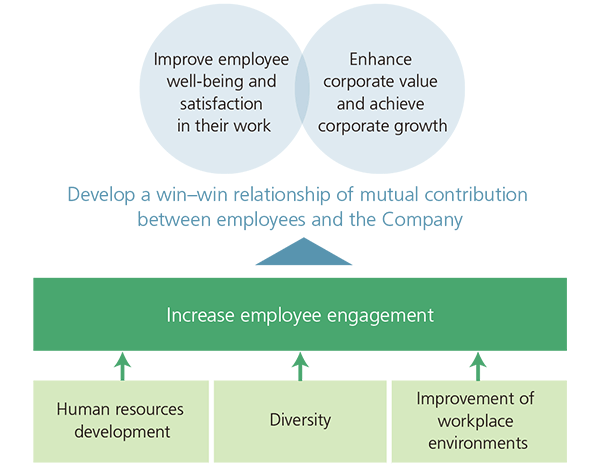
The Daiei Kankyo Group believes that enhancing corporate value and achieving sustainable growth require an
environment in which each employee can approach their work with motivation and pride and fully demonstrate
their abilities. The foundation of such an environment is job satisfaction and well-being.
Job
satisfaction refers to a state in which employees feel that they are contributing to society and the Company
through their work and are able to work proactively while continuing to grow and take on new challenges.
Well-being refers to a state in which employees achieve an overall sense of fulfillment through physical and
mental health, a secure workplace environment, and a balance between work and private life.
To put into
practice the corporate philosophy of creation, innovation, and meeting challenges and achieve the goals of
the Medium-Term Management Plan, it is essential that employees find meaning in their daily work and feel
that their efforts contribute to the future of the Company and society. Enhancing job satisfaction and
well-being also improves employee engagement, creating a positive cycle in which individual growth and
workplace vitality lead to greater corporate value.
Based on this thinking, the Group positions enhancing
employee engagement at the core of its human resources strategy. To achieve this, we are making strategic
investments in human capital based on data and are focusing on providing growth opportunities, creating
environments in which diverse human resources can thrive, and developing workplace environments in which
employees can continue working with confidence and security. We believe that these initiatives, working in
conjunction with one another, support the job satisfaction and well-being of each employee and contribute to
corporate growth and value creation for society.
Human Resources Development
Developing the next generation of leaders
The Daiei Kankyo Group continuously expands its training and education programs with the aim of developing
human resources capable of realizing the Group’s Management Vision. Through next-generation leadership
training programs for future management and managerial candidates, we seek to enhance capabilities and broaden
perspectives. In the fiscal year ended March 31, 2026, 111 employees participated in these programs.
In
addition, we systematically implement stratified training and education programs aimed at improving
job-specific skills, supporting each employee in enhancing their expertise while realizing personal growth. We
believe that these initiatives expand opportunities for growth and taking on challenges, which serve as a
source of job satisfaction, and help employees find meaning and a sense of contribution in their daily work.
Investing in employees who are motivated to grow
We believe that supporting employees who are highly motivated to learn and take on challenges in building
diverse careers is an important responsibility of the Company.
We promote internal recruitment programs as
a mechanism to enhance organizational transparency and provide fair career development opportunities. We
create opportunities for employees to proactively take on new challenges, including recruitment for newly
launched facilities and projects. In addition to enhancing training programs, we also provide opportunities
for employees to gain experience in different departments through personnel rotations and engage with people
outside the Company, helping them broaden their perspectives and strengthen their capabilities.
Educational system and training programs
Enhancing the educational system is essential to operate an organization where employees enthusiastically
work for the growth of the Company.
We have established a systematic education system. The main training programs include “Companywide training”
on the code of conduct (Daiei Kankyo Group Business Conduct Guidelines) and compliance, as well as “stratified
training” implemented in conjunction with promotions and other such events, and “skills education” implemented
by job type across business locations.
In recent years, we have also focused on expanding selective training with the aim of cultivating the next
generation of executives and leaders, as part of building the foundation for a 100-year company. We also
actively support taking external courses and other training to acquire the necessary qualifications, licenses,
skills, and knowledge for an employee’s work, and support approximately 300 different qualifications. Aiming
to develop human resources who can practice the commitment to creation, innovation, and meeting challenges,
the Daiei Kankyo Group is working to establish an educational system to support employee growth.
The most important issue in human resources development is to systematically nurture leaders who will carry
the Group forward into the future. In the development of our educational system, we are therefore placing
particular emphasis on enhancement of selective training. We plan to evolve our training programs by utilizing
outside educational institutions and experts. Nurturing outstanding management executives also necessitates
cultivating a wide range of knowledge and expertise through experience in a variety of businesses and
departments. We are therefore proactive in providing effective job rotations in cooperation with Group
companies.
Diversity (Diversity Promotion)
Promoting active participation of women
Our Group believes that women are indispensable to the Company’s sustainable growth, and actively recruits
women who are new university graduates or previous graduates. Women accounted for 44.4% of new graduate hires
(graduates from a four-year university or graduate program) in the fiscal year ended March 31, 2026, and we
will continue to actively recruit women in the fiscal year ending March 31, 2027 and beyond to meet our target
of a female new graduate recruitment ratio of 30% or more.
We are also actively pursuing promotion of women
to management positions. Female managers accounted for 4.5% of all managers at the end of the fiscal year
ended March 31, 2026. The target for the fiscal year ending March 31, 2027 is 4.6% or higher, and we are
implementing measures to increase the number of female employees who aim to become leaders. At the same time,
the relatively small number of women working in operational roles remains a challenge in increasing the number
of female managers. To address this issue, we are using business sites where women are actively contributing
as model cases and expanding these initiatives across the Group, while also considering clearer career paths
and promotion opportunities to management positions for highly capable and motivated female employees. We are
also developing systems that take childcare and caregiving responsibilities into consideration and supporting
diverse working styles to create an environment in which women can grow and thrive.
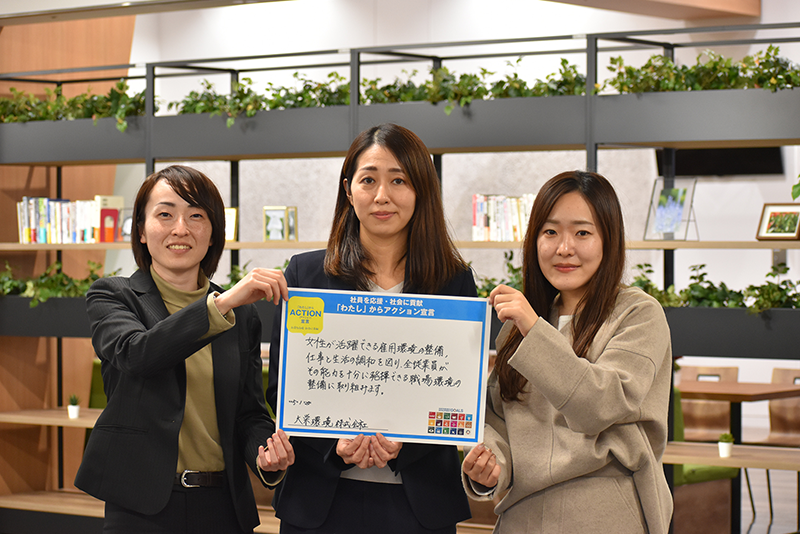
My Action Declaration
Securing diverse human resources (employment)
The Daiei Kankyo Group aims to sustainably enhance corporate value by expanding the processing capacity of
heat treatment facilities, enlarging facilities in line with building Local Circular Ecological Spheres, and
promoting collaboration with local partner companies. As a foundation supporting this business growth, we
formulate workforce plans that include securing human resources and systematically promote appropriate
personnel allocation.
In line with the expansion and construction of new facilities, we actively conduct
not only new graduate recruitment but also mid-career hiring, while continuing to promote locally rooted
employment. We also recognize that securing qualified personnel and managers is a critical challenge. In
parallel with developing talent internally, we will recruit management professionals and certified personnel
externally and assign them appropriately to the facilities where they are needed. Looking ahead to an even
more pronounced labor shortage due to the declining birthrate and aging population, we are working to secure
workforce diversity and achieve sustainable growth by promoting the employment of women, seniors, people with
disabilities, and foreign nationals. The Group actively promotes the rehiring of retirees with extensive
knowledge and skills, and more than 70% of retirees continue working through the rehiring system. Many Group
companies allow employment contracts up to the age of 70, and we position the utilization of senior human
resources as an important human resources initiative.
For the employment of persons with disabilities, we
established DINS Mirai Co., Ltd. as a special subsidiary in June 2021 to create a supportive work environment
while also promoting human resource development through on-the-job training (OJT) programs. In addition, Kyoto
Kankyo Co., Ltd., which employs the largest number of persons with disabilities within the Group, received
Monisu Certification from the Ministry of Health, Labour and Welfare in May 2023 in recognition of its
excellence as a small and medium-sized enterprise employing persons with disabilities. As of June 1, 2025, the
Group’s employment rate of persons with disabilities stood at 3.58%, well above the legal requirement of 2.5%.
Going forward, we will continue providing an environment in which persons with disabilities can demonstrate
their abilities while contributing to society and the growth of the Group as a whole.
Sustainability data related to diversity
The Prevention of Harassment Against Job Seekers
The Daiei Kankyo Group values a corporate culture where every individual, with their unique perspectives and talents, can reach their full potential. To maintain a recruitment environment where all candidates feel safe and empowered to express themselves fairly, we are firmly committed to conducting all hiring activities free from any form of harassment.
Code of Conduct for the Prevention of Harassment Against Job Seekers
Improvement of Workplace Environments
Health and productivity management
We believe that the mental and physical health of employees leads to the well-being of the employees and
their families, and is the driving force behind their motivation to work. We strive to improve work
environments where employees can continue to work in good health by implementing various measures such as
mental health support measures, a subsidy system for additional medical examinations, a subsidy system for
medical examinations of the spouses of employees with 10 or more years of service, and promoting smoking
cessation activities.
Since the fiscal year ended March 31, 2025, we have prohibited smoking in Company
vehicles to prevent passive smoke exposure and promote employee health, while also providing remote smoking
cessation support programs for employees who wish to quit smoking.
In March 2026, the Company and three
consolidated subsidiaries—Mie Chuo Kaihatsu Co., Ltd., DINS Kansai Co., Ltd., and Kyodoh Doboku Co., Ltd.—were
certified as the 2026 Certified KENKO Investment for Health Outstanding Organizations (Large Enterprise
Category), a program designed by the Ministry of Economy, Trade and Industry and administered by the Nippon
Kenko Kaigi (Japan Health Council). This marked the second consecutive year of certification for the Company
following 2025.
(in Japanese only)
Daiei Kankyo Co., Ltd. and its consolidated subsidiaries certified as the 2026 Certified KENKO Investment for Health Outstanding Organizations
Promoting Health and Productivity Management Declaration
Consideration for work–life balance
While ensuring thorough compliance with laws and regulations, we are working to improve work–life balance
with the aim of creating a comfortable working environment for employees. Specifically, we provide regular
guidance to reduce overtime work and require employees who exceed certain thresholds to attend consultations
with occupational physicians.
Over the two-year period covering the fiscal years ended March 31, 2024 and
2025, we increased the number of annual holidays by five days in each fiscal year and strengthened efforts to
encourage employees to take paid leave. Since April 2026, employees have been eligible for a number of annual
holidays equivalent to companies with a complete two-day weekend system. We believe these initiatives
contribute not only to improving employee engagement but also to enhancing recruitment activities.
To
promote the use of paid leave, we have established a management system under which supervisors regularly
encourage employees with low paid leave utilization to take leave. We have set a target of increasing the paid
leave utilization rate from 76% as of March 31, 2026 to 90% or higher in the fiscal year ending March 31,
2027.
Balancing work and childcare
The Daiei Kankyo Group has established systems that support employees in balancing work with life events such
as pregnancy, childbirth, and childcare, enabling them to choose work styles that align with their life plans.
Our childcare leave system is available until a child reaches one year and six months of age, while shortened
working hours for childcare are permitted until the first March 31 after the child turns 12. In addition,
since the fiscal year ended March 31, 2026, we have issued the “Sukoyaka Letter” three times annually to
employees on childcare leave to keep them informed about developments in their departments and help them
maintain a sense of connection with the workplace.
We have also introduced spousal childbirth leave and
childcare leave at birth as paid leave programs in the fiscal year ended March 31, 2025 to encourage male
employees to participate in childcare. Through the promotion of these programs, the rate of childcare leave
utilization among male employees reached 102.9% as of March 31, 2026. Increased participation by male
employees in childcare has contributed not only to a stronger sense of belonging and higher motivation toward
the Company, but also to more active communication within families.
Assignment and reassignment of employees
In determining assignment of new employees, we confirm the wishes of the employee, take their wishes into
consideration, and observe those wishes in assigning them, insofar as possible.
We have also introduced a self-reporting system and provide annual opportunities for employees to submit their
wishes in writing. The employee’s superior and the Human Resources Department speak with the employee and,
based on the employee’s wishes, make an effort to incorporate positive wishes to the extent possible, enabling
them to outline a future career plan.
Increasing Engagement
The Daiei Kankyo Group conducts employee surveys and operates a self-reporting system to understand employees’
job satisfaction and requests, with the aim of enhancing employee motivation and engagement. We use the results
to promote a more fulfilling workplace environment.
Since the fiscal year ended March 31, 2025, we have
introduced engagement surveys to identify organizational strengths and challenges through analysis of the survey
results. These results are shared at the business site level and used to develop specific initiatives aimed at
improving employee well-being. We are also working to enhance employee engagement by increasing incentive rates
for participation in the employee stock ownership plan and granting restricted stock awards. Through these
initiatives, we aim to foster a corporate culture in which employees and the Company continue to grow together.
Strengthening the organizational foundation through engagement surveys
The Daiei Kankyo Group positions the sustainable enhancement of corporate value and employee engagement as key
management priorities and conducts engagement surveys on a regular basis. In 2025, the employee engagement
index remained strong compared with the previous year. In particular, high levels were maintained in areas
such as penetration of the management philosophy, compliance awareness, and understanding of the evaluation
system, confirming that an open organizational culture is steadily taking root, mainly among management-level
employees. This reflects the sound corporate culture that the Daiei Kankyo Group has cultivated over the
years, and we will continue working to strengthen it further.
At the same time, three issues were identified in relation to sustainable growth and further organizational
revitalization.
The issues identified through the 2025 survey results and future improvement measures are as follows.
| Issue | Improvement measures |
|---|---|
| 1. Optimizing work quality and workload Challenges related to securing human resources for frontline operations led to uneven workload distribution in some areas. |
1. Optimizing the human resources portfolio and improving work engagement By strengthening recruitment and promoting appropriate personnel allocation, we will optimize workload distribution and create an environment in which each employee can maintain high work engagement. |
| 2. Deepening communication It is important to secure sufficient time for dialogue between supervisors and team members, even in busy work environments. |
2. Fostering a dialogue-oriented organizational culture and promoting mutual
understanding By creating regular opportunities for dialogue and introducing communication programs, we will deepen mutual understanding among supervisors, subordinates, and teams and foster an organizational culture that encourages active exchange of opinions. |
| 3. Expanding growth opportunities Growing expectations for further enhancement of education and training systems and for more equal access to growth opportunities across departments were observed. |
3. Enhancing career development support and training systems To enable all employees to envision their own career paths, we will work to equalize education and training opportunities while strengthening career development support tailored to each individual. |
The Daiei Kankyo Group will continue listening carefully to the voices of each employee and promoting dialogue and action through engagement surveys in order to create a workplace environment in which all employees can fully demonstrate their abilities. Through these initiatives, we will contribute to the realization of a sustainable society and the growth of the Group.
Fair evaluations and treatment
The Group ensures employee compensation in compliance with the legally mandated minimum wage and the principle of equal pay for equal work. In conducting evaluations that form the basis of employee compensation, supervisors hold semiannual interviews with employees and fairly assess not only work performance but also organizational contributions from multiple perspectives, reflecting these assessments in compensation.
Initiative to rectify the wage gap between men and women
In the fiscal year ended March 31, 2026, women’s wages in the Group were 73.9% of men’s wages. At the Daiei Kankyo Group, employees are treated fairly based on individual performance and contributions, and compensation is not affected by gender, nationality, or age. However, due to the nature of our business model, the proportion of male employees is high, and men account for the majority of management positions in workplaces outside administrative functions, which affects the gender pay gap. To address this issue, we support women in developing their career plans while providing broader opportunities for them to play active roles within the Group. In particular, we believe that promoting the active participation of women in management positions and above will help reduce the gender pay gap, and we are therefore proactively promoting qualified female employees to these positions.
Employee incentive programs
Compensation systems supporting sustainable corporate value enhancement
The Daiei Kankyo Group has introduced a restricted stock compensation plan for executive
management and managers in key positions with the aim of sustainably enhancing corporate value and further
sharing value with shareholders.
Under this system, eligible employees hold Company shares, enabling them to share both the benefits and risks
of stock price fluctuations with shareholders and thereby strengthen their awareness of management
participation from a medium- to long-term perspective. In addition, certain executive management members are
subject to performance-linked restricted stock compensation that reflects the achievement of management
strategy targets, thereby clarifying incentives tied to the achievement of performance goals.
These initiatives promote disciplined decision-making and commitment to growth among management and strengthen
governance through a compensation structure with a high degree of transparency and objectivity.
Human capital foundation and retirement pension system supporting sustainable growth
Daiei Kankyo Co., Ltd. positions the development of an environment in which human resources, the source of
sustainable value creation, can continue demonstrating high performance with confidence over the long term as
an important management priority. As part of these efforts, we have introduced a retirement pension system
combining a defined benefit corporate pension plan (DB) and a defined contribution pension plan (DC).
By combining the long-term financial stability provided through the DB plan, which guarantees future benefit
levels, with the autonomous asset-building opportunities enabled by the DC plan, under which employees can
manage assets through their own choices, we also promote greater financial literacy. This system design
contributes not only to attracting and retaining talented human resources, but also to building a strong
organizational foundation that enables employees to reduce concerns about the future and focus on creative
work.
Employee stock ownership plan fostering an ownership mindset
The Daiei Kankyo Group positions its employee stock ownership plan as one of the pillars of its human
resources strategy, with the expectation that each employee will adopt a management perspective and contribute
autonomously to enhancing corporate value.
To strongly support employee asset building and increase motivation to participate in management, we currently
provide a generous incentive program under which the Company contributes 20% of employees' accumulated
contributions for a limited period. Moreover, in the fiscal year ended March 31, 2024, we granted restricted
stock shares for the employee stock ownership plan, establishing a framework under which employees share with
shareholders both the benefits and risks of medium- to long-term stock price fluctuations. These initiatives
strengthen employees' awareness of the connection between their daily work and corporate value enhancement,
align the interests of employees and shareholders, and support the sustainable growth of the Group as a whole.
Respect for Human Rights
Respect for human rights is the foundation for business activities. We formulated the Daiei Kankyo Group Human
Rights Policy in June 2024 to clearly express our stance on respecting human rights, both internally and
externally.
Guided by our Management Philosophy, ”With our strong commitment to creation, innovation, and meeting challenges,
we shall contribute to society while striving for the coexistence of human life, industry, and nature,” we are
dedicated to respecting human rights and addressing social issues in collaboration with all stakeholders,
including business partners, shareholders, local communities, and employees, as an integral part of the social
infrastructure that supports the future.
Daiei Kankyo Group Human Rights Policy
Human Rights Due Diligence
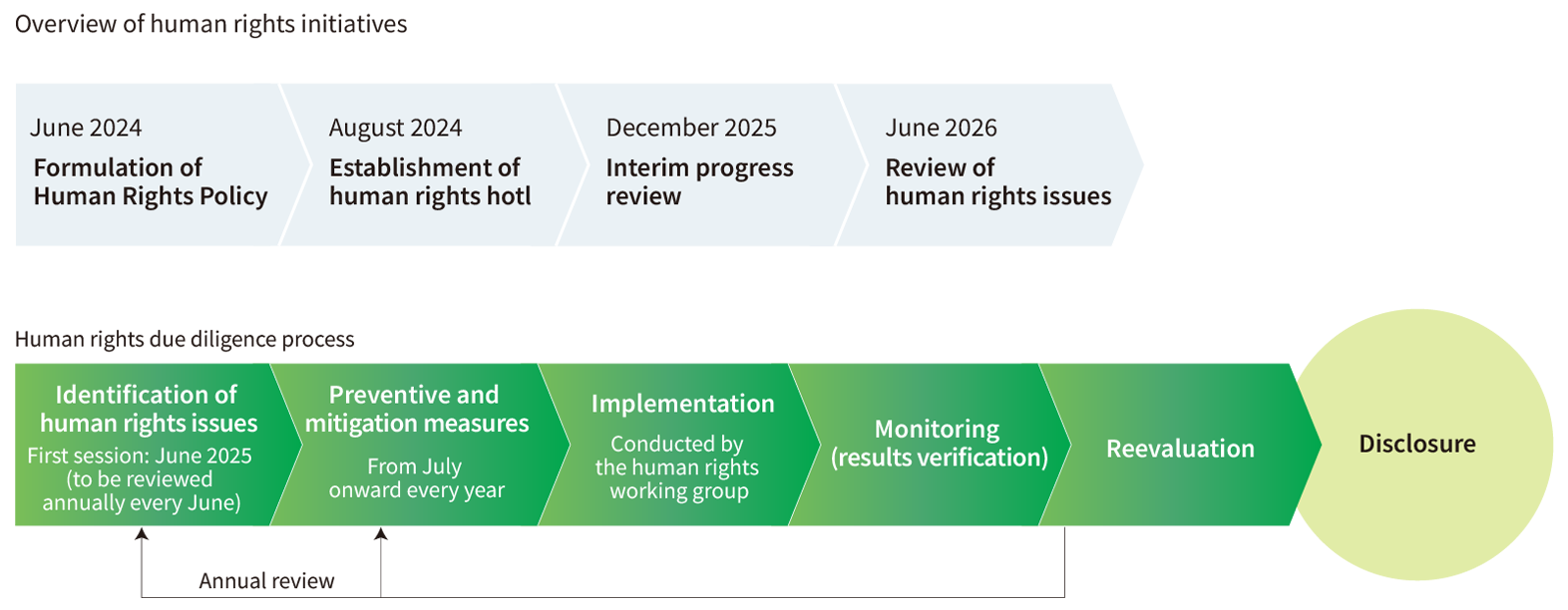
The Group is working to establish a human rights due diligence framework in accordance with international human
rights standards, including the United Nations Guiding Principles on Business and Human Rights.
To detect potential negative human rights impacts of our business activities, we identified candidate issues to
be resolved between December 2024 and March 2025, and prioritized the most critical through a scoring-based
evaluation. Following discussions with Outside Directors and deliberations by the Sustainability Promotion
Committee and the Board of Directors, we established our key human rights issues in June 2025.
We began implementing human rights due diligence for these key issues starting in July 2025. By applying the
plan-do-check-act (PDCA) cycle, we will ensure that preventive and mitigation measures are implemented
effectively and sustained.
Moreover, if we become aware through the human rights hotline on our corporate website that a stakeholder has
been affected by a human rights violation or may potentially be affected in our business activities, we work to
ensure that corrective action is taken to minimize the impact.
Material human rights issues and measures to prevent and mitigate adverse impacts
| Human rights issues | Potential human rights violation risks | Actions for FY2026/3 | |
|---|---|---|---|
| 1 | Local community | Human rights violations that threaten the lives and health of local residents, resulting from the negative environmental impact of corporate activities | To reduce the impact on the lives and health of local residents, we conducted regular maintenance of waste treatment facilities and periodic environmental monitoring. We provided thorough driver safety training and vehicle management to minimize accidents and environmental impact. |
| 2 | Occupational safety and health | Human rights violations that threaten the health of employees, resulting from the negative environmental impact of corporate activities | To ensure a safe working environment, we provided thorough training on the proper maintenance of equipment, work procedures, and the use of personal protective equipment. In addition to regular health checkups and environmental monitoring, we maintained rigorous transport management and emergency response drills. |
| Human rights violations suffered by employees due to work-related accidents and occupational diseases | To prevent occupational accidents and illnesses, we rigorously implemented equipment upgrades and maintenance based on risk assessments. We reduced human rights risks by protecting employees’ safety and health through safety training, workplace patrols, chemical management, work environment monitoring, and overtime management. | ||
| 3 | Working conditions and related matters | Human rights violations suffered by employees due to working conditions | We introduced a system to identify and notify cases of excessive working hours and legal violations at an early stage, ensuring appropriate working hour management. We ensured that wages met or exceeded the statutory minimum wage, thereby reducing human rights risks for employees. |
| Human rights violations historically associated with acquired companies | We reduced the risk of human rights violations by addressing unpaid overtime and contract-related issues at newly acquired companies, while providing harassment prevention training, risk assessments, and safety education. | ||
| 4 | Harassment | Human rights violations involving harassment | To prevent harassment, we established consultation channels, conduct regular training, and ensure that relevant policies are thoroughly communicated. We were committed to creating a workplace where employees can work with peace of mind. |
Customer Harassment Policy
The Daiei Kankyo Group aims to realize a society where it coexistences with human life, industry, and nature,
as stated in our management philosophy, and we carry out our daily work with the trust of our customers and
local communities as our top priority.
On the other hand, we recognize that unreasonable and malicious
complaints, so-called customer harassment, which have become a social issue in recent years, are a serious
matter that undermines the dignity of Officers and Employees, etc. and has a negative impact on the work
environment.
The Group will continue to respond sincerely to opinions and requests from our customers,
business partners, facility users, and others. At the same time, in order to respect the human rights of each
and every Officers and Employees and maintain a comfortable work environment, we hereby establish the
"Customer Harassment Policy." Going forward, we will implement preventive measures and appropriate responses
in accordance with this Policy.
Customer Harassment Policy
Occupational Safety and Health
Safety and Health Action Policy and management system
We have developed the Safety and Health Action Policy based on the Safety and Health Philosophy which serves as
the basis for all safety and health activities in the Group.
Each fiscal year, each business location formulates safety and health activity plans and engages in safety and
health activities aimed at reducing the number of accidents / occupational accidents, based on these common
philosophy and policy.
Safety and Health Philosophy
We place top priority on safety and health in all aspects of our business, and strive for workplaces free of accidents and disasters by being watchful, attentive, and considerate.
Safety and health code of conduct
- ● Prioritize safety and health for employees and their families
- ● Clarify safety and health organizational responsibilities and authorities
- ● Reflect on past accidents and disaster drills to make sure they are not forgotten
- ● Make the “5S” principles a basic practice (Sort, Set-in-Order, Shine (clean), Standardize, and Sustain/Self-discipline)
- ● Take individual responsibility and act in unison
- ● Break through the status quo and pursue continual improvement
- ● Create a welcoming workplace that is considerate of senior employees
Occupational Safety and Health Management
(FY2026/3)
Number of employees covered by the occupational safety and health management system (including temporary
employees): 2,894
Percentage of employees covered by the occupational safety and health management system: 100%
Accidents/Occupational Accidents and Risk Mitigation
At the Daiei Kankyo Group, the Enterprise Division of Daiei Kankyo Co., Ltd. centrally manages information
related to accidents and occupational incidents across the Group. On October 1, we reorganized the Safety Section of the Enterprise Department into the Safety Department to further strengthen our management structure, and the entire Group is working together to prevent accidents and disasters.
When an accident or occupational incident
occurs, a preliminary report is immediately issued to share information across the Group, and a report
summarizing corrective measures is posted. The details are shared again through monthly labor-management joint
health and safety committee meetings held at each site. At Groupwide safety and health conferences and meetings
for safety personnel, analytical data on accidents and occupational incidents is presented and shared.
Each
site conducts risk assessments and works to fundamentally reduce risks by implementing intrinsic and engineering
controls for hazardous operations and locations identified by employees at worksites.
In addition, pre-task
hazard prediction (KY: Kiken Yochi) activities are conducted to ensure that all workers are aware of potential
hazards before beginning work.
Recognizing that even minor incidents can lead to serious accidents, the
entire Group works together to promote safety initiatives.
In the fiscal year ended March 31, 2026, there
were 14 serious accidents resulting in four or more days of leave, and the total number of accidents and
incidents, including property damage, was 147. The number of serious accidents increased by two cases from the
previous fiscal year, while the total number of accidents and incidents, including property damage, increased by
10 cases.
| FY2022/3 | FY2023/3 | FY2024/3 | FY2025/3 | FY2026/3 | |
|---|---|---|---|---|---|
| Fatal accidents (Group) |
0 | 0 | 0 | 0 | 0 |
| Lost workday accidents (Group) |
14 | 19 | 17 | 13 | 16 |
| Non-lost workday accidents (Group) |
18 | 10 | 14 | 23 | 26 |
| Fatal accidents (partner companies) |
1* | 0 | 0 | 0 | 0 |
| Lost workday accidents (partner companies) |
7 | 16 | 8 | 8 | 10 |
| Non-lost workday accidents (partner companies) |
9 | 7 | 6 | 9 | 8 |
* The fatal accident in FY2022/3 was a rear-end collision involving a dispatched driver.
Safety Education and Training
In the fiscal year ended March 31, 2026, we focused on classroom-based safety education for employees with less
than 10 years of service, in addition to employees with less than three years of service who have a particularly
high accident rate, as well as training through videos recreating serious occupational accidents.
Across the
Group, the series of videos recreating serious occupational accidents (8 videos in total) was viewed by more
than 10,000 people in total.
Training implementation steps
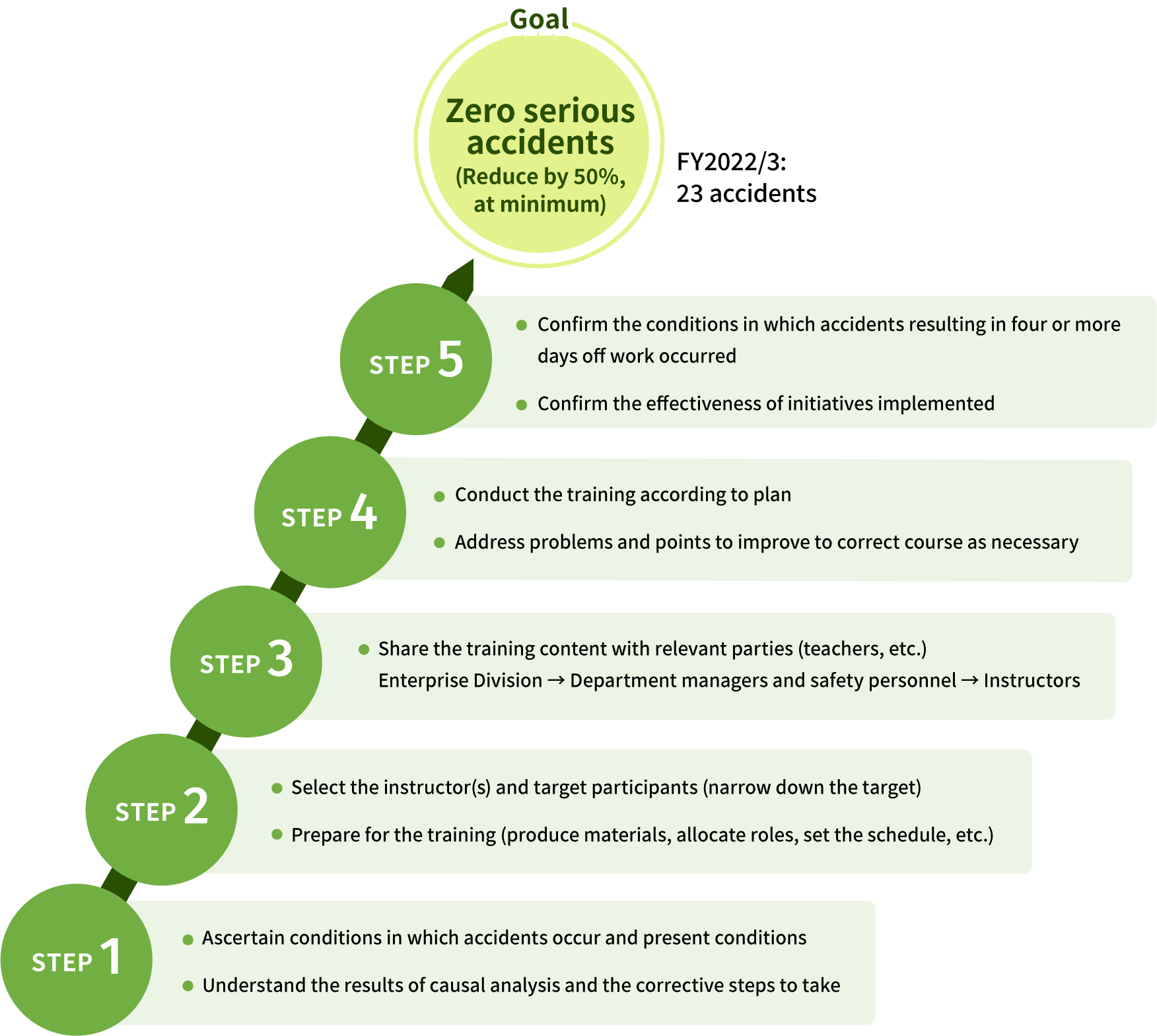
Targets for training
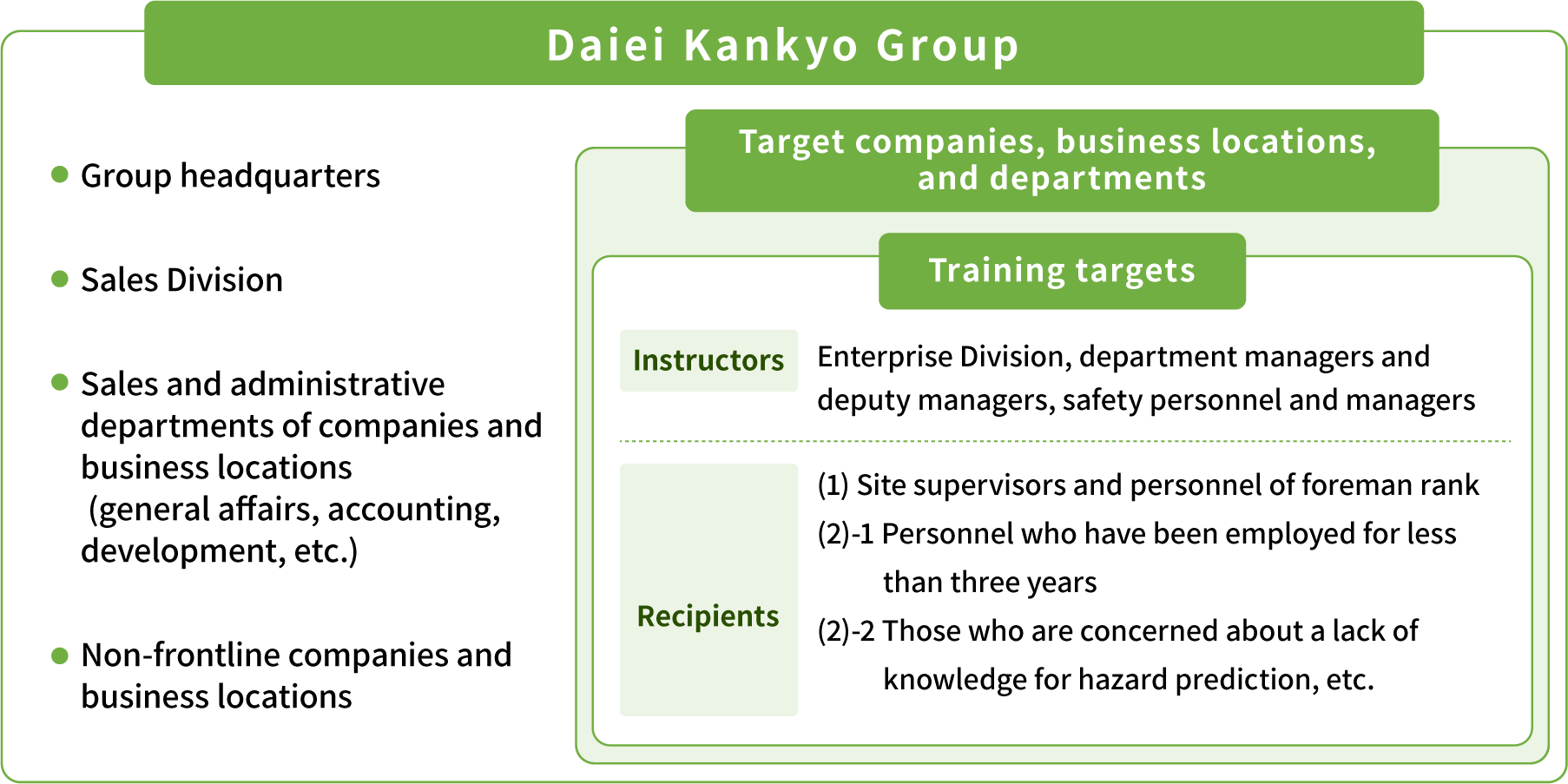
Safety Management at Partner Companies
At the Daiei Kankyo Group Safety Conference every year in July, we make sure that our partner companies
understand our Safety and health code of conduct. Although the partner companies who provide collection and
transportation services under contract are not included when counting the number of accidents/occupational
accidents, they share indirect information on safety activities.
For exclusive partner companies who are stationed at a work site, we perform the same integrated data management
as we do for Daiei Kankyo Group employees and temporary workers. The same activities are also implemented for
safety education, improving the ability to detect hazards on a routine basis, and alerts.
Number of participating companies in the Safety Council: 22
Total number of participants in the Safety Council: 211
Number of workers at partner companies: 170
Total number of participants in site safety meetings: 278
Reduction in Vehicle Accidents and Prevention of Related Injuries
In the transportation department of the Daiei Kankyo Group, a joint safety meeting is held each month except
March, August, and December, with participation from managers of Group companies and sites that own transportation
vehicles. At these meetings, we work to reduce vehicle accidents across the Group by reporting and analyzing
accidents / occupational accidents, sharing accident and near-miss footage, and conducting lectures and group
discussions for managers.
In addition, we conduct annual emergency response drills for all drivers, including
drivers who are temporary workers, based on scenarios involving emergencies such as waste scattering, leakage,
fires, and vehicle accidents during waste collection and transportation operations. Through these drills, we seek
to strengthen our ability to respond quickly and appropriately to emergencies.
In the fiscal year ended March
31, 2026, a total of 55 accidents / occupational accidents occurred in vehicle transportation. Of these, one
incident involved injuries to drivers or assistants (compared with 10 incidents in the fiscal year ended March 31,
2025), while 54 cases involved property damage or traffic accidents without personal injury (compared with 35
cases in the fiscal year ended March 31, 2025).
- Practical training (experience with vehicle characteristics and hands-on training)
- Each year, we provide two types of hands-on practical training for all drivers, divided between the first
and second halves of the fiscal year.
In the fiscal year ended March 31, 2026, in addition to training related to vehicle operation, we newly
introduced hands-on training aimed at preventing injury accidents during cargo handling operations, further
enhancing the training program.
- ・First half: Vehicle characteristics (vehicle height)
- ・Second half: Risks of falls from height and falls from vehicles or platforms
- Work safety training (audiovisual training through videos that re-enact accidents which resulted in injuries)
- As in the previous fiscal year, in the fiscal year ended March 31, 2026, we distributed videos reenacting occupational accidents resulting in four or more lost workdays (8 cases) in order to enhance hazard awareness through simulated viewing experiences.
- Near miss video training (hazard prediction training using dashcam videos)
- As part of monthly safety training, in addition to footage of near misses and accidents involving Company vehicles, we encourage drivers to provide footage of near misses and accidents involving vehicles from other companies, and we continue to collect and utilize a wide range of traffic-related video footage. Using this dashcam footage, we conduct “Mini KYT (hazard prediction training)” during safety meetings and work to enhance practical training content that reflects actual conditions while helping prevent traffic accidents.
- New initiative: Introduction of hands-on training for injury prevention
- In the cargo transportation industry, falls from height and falls from vehicles or platforms account for the highest rate of occupational accidents, representing more than 30% of all incidents, and a similar trend can be seen within the Daiei Kankyo Group. Believing that effective prevention requires training that enables workers to understand both the risks and dangers involved, we introduced hands-on practical training. As part of the hands-on training, and in order to avoid the risk of injury that could result from drivers personally experiencing actual falls, the Transportation Department created dummy mannequins using unused materials from transportation operations. By dropping the mannequins from a height of approximately one meter, the training enables participants to experience the severity of the impact caused by falls from height. Moreover, we use practical demonstrations to explain both proper and improper procedures for entering and exiting driver seats, climbing vehicle ladders, and getting on and off containers and cargo platforms, thereby promoting the adoption of safe work practices.
Stakeholder Engagement
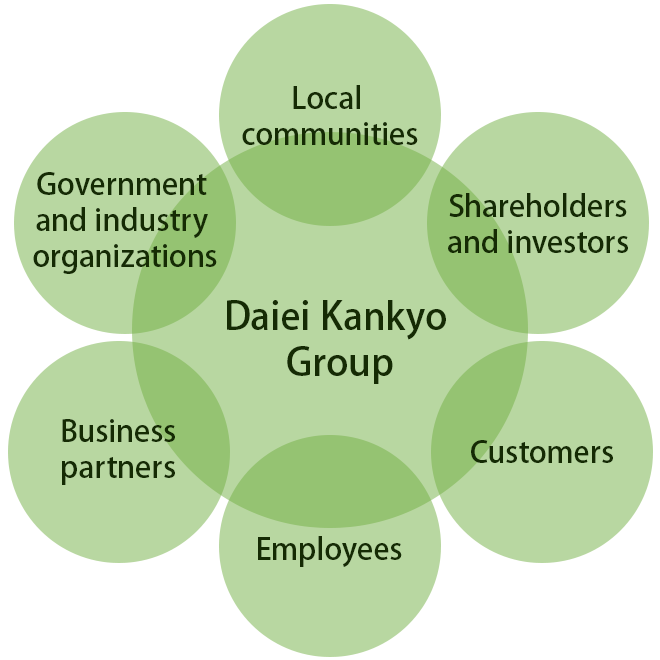
Key stakeholders of the Daiei Kankyo Group
The Group values its relationships with a diverse range of stakeholders, including customers, shareholders and investors, business partners, government and industry organizations, local communities, and employees. By earning their trust, the Group aims to create new value through its business activities.
| Stakeholders | Main engagement methods | |
|---|---|---|
| Customers | All customers using the services provided by the Group |
|
| Shareholders and investors |
Individual and institutional investors, including shareholders of Daiei Kankyo Co., Ltd. |
|
| Government and industry organizations |
National and municipal agencies and organizations responsible for policies, laws, and initiatives |
|
| Business partners | All companies that provide various forms of support for our services, including partner companies that collaborate with us to address environmental, social, and economic challenges |
|
| Local communities | People in the community who understand and trust the Group’s business, as well as society and the natural environment where they live |
|
| Employees | All employees of the Group and their families |
|
Engagement with the Local Community
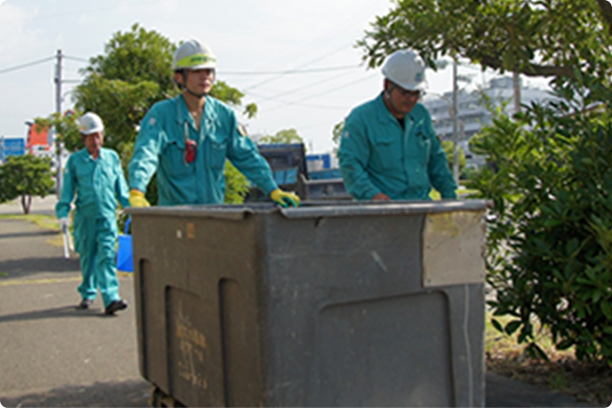
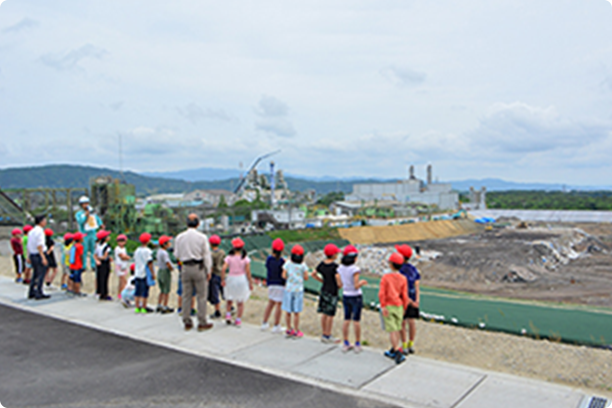
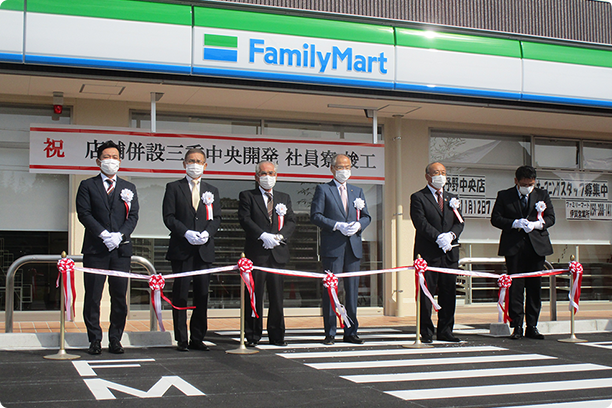
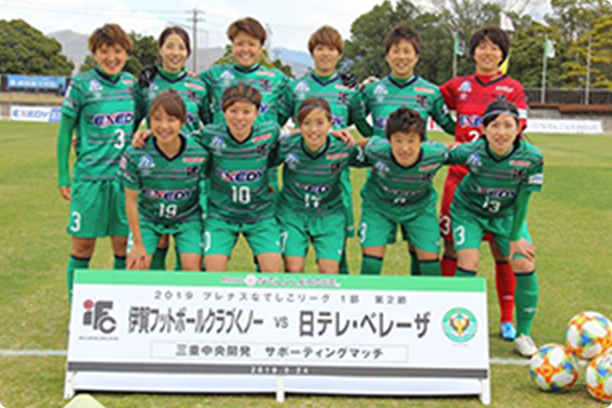
Our business is built on trust earned through communication with local communities who understand our business. We believe that we can further deepen this trust by becoming an integral part of people’s lives. To this end, we are promoting various initiatives under the slogans of "openness," "interaction," and "appreciation."
Communication with local communities
-
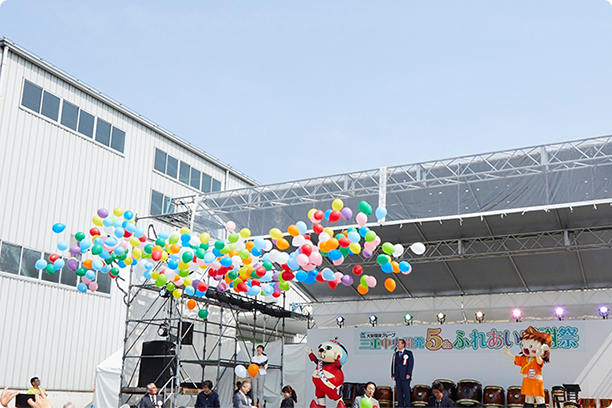
Mie Chuo Kaihatsu Fureai Festival -
Community cleanup activities -
Facility tours -
Opening of convenience store -
Sponsorship contract with Iga FC Kunoichi Mie -

Sponsorship of a children’s baseball tournament
Promotion of local employment
We actively promote local employment with the aim of revitalizing communities. We are working with agricultural producers’ cooperative corporations and Izumi Recycling Environment Park to provide skills and knowledge to people employed in the local community.
Seminars for clients
We hold seminars for our clients periodically. These seminars are well received for their wide-ranging content delivered from the perspective of waste generators.
Collection of plastic bottle caps
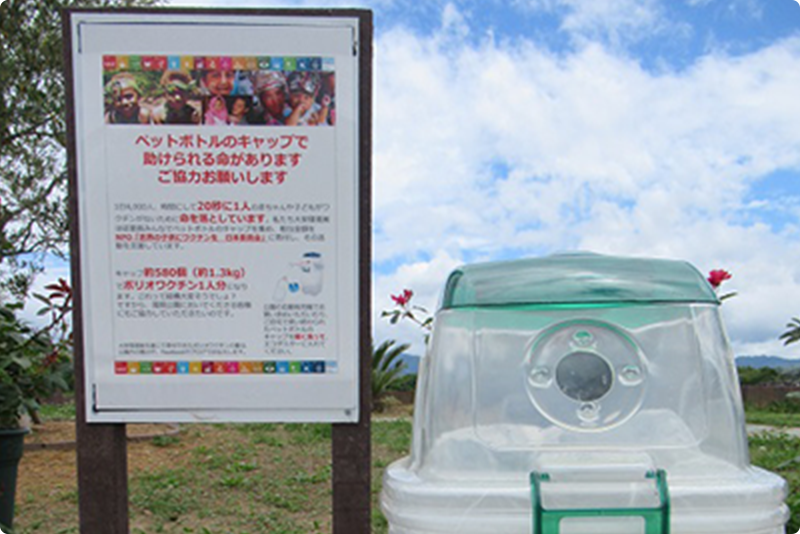
4,000 babies and children die every day, or 1 every 20 seconds, due to a lack of vaccines.* We collect plastic bottle caps with the cooperation of all our employees as well as other organizations and individuals who support our activities, and donate the equivalent amount of raw materials (15 yen per kilogram) to the Japan Committee, Vaccines for the World’s Children. The collected caps are turned into plastic pallets at our plastic recycling plant.
*Source: Japan Committee, Vaccines for the World’s Children website (Our Activities)
(in Japanese)
https://www.jcv-jp.org/activity Accessed on Feb. 9, 2022
Izumi Recycling Environment Park
Izumi Recycling Environment Park in Izumi City, Osaka Prefecture, was originally a controlled final disposal site. This park is the embodiment of our desire to return former landfill sites to local communities as recreational spaces filled with nature. The park’s facilities incorporate a variety of recycled materials. Many people visit the park throughout the year to enjoy seasonal flowers and sports.

(First Grand Prize winner)